Soups & Stews
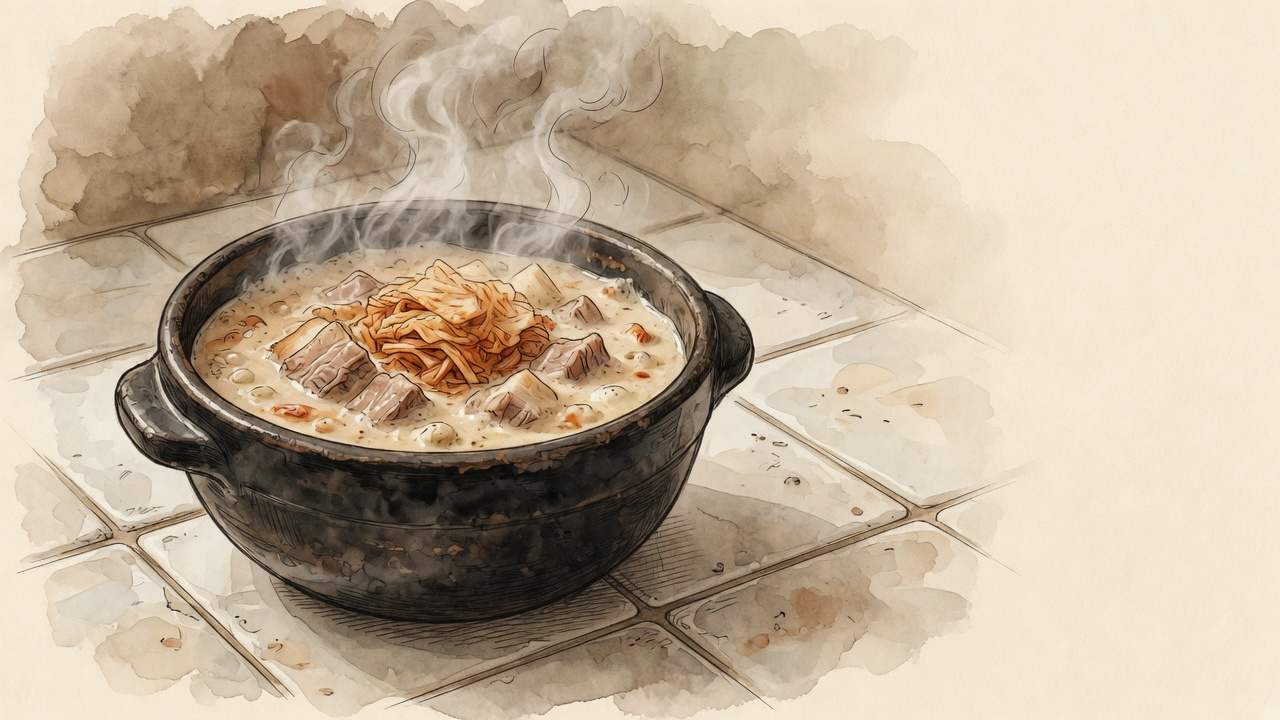
Kongbiji Jjigae (Soybean Pulp Stew)
Sauté pork and well-fermented kimchi in perilla oil for flavor, add water, then stir in the soybean pulp. The pulp sticks easily, so simmer it over low heat while stirring, and season with salted shrimp.
한국어로 보기 (Korean version)
Steps
- 1
Cut the pork into bite-size pieces. Shake the filling off the kimchi and chop it finely. Slice the leek on the diagonal.
- 2
Heat the perilla oil in a pot over medium heat and sauté the pork for 3 minutes, then add the kimchi and garlic and sauté 3 minutes more.
Sautéing the kimchi well softens its sourness and flavors the broth.
- 3
Pour in the water. When it boils, lower to medium-low and simmer for 10 minutes, until the pork is cooked through and the kimchi is soft.
- 4
Add the soybean pulp, stir it in evenly, partly cover, and simmer over low heat for 7 minutes. Stir two or three times so it does not stick to the bottom.
If it gets too thick, add water 2 to 3 Tbsp at a time until it slowly runs off a spoon.
- 5
Season with salted shrimp and salt, add the gochugaru and leek, and simmer 1 minute more.
Substitutions
| Instead of | Use | How |
|---|---|---|
| pork | none | Without meat, sauté the kimchi in perilla oil a little longer for flavor. Using anchovy stock instead of water keeps it from tasting thin. |
| saeujeot | 1 tsp guk-ganjang (soup soy sauce) | Without salted shrimp, season with soup soy sauce. The stew will be slightly darker. |
| perilla oil | cooking oil | Plain oil works, but the nutty perilla oil suits the soybean pulp best. |
Storing leftovers
Soybean pulp sets thick as it cools and can turn sour in a day when the weather is warm. Cool the stew quickly and refrigerate for up to 2 days; to reheat, loosen it with a little water and bring it back to a boil over low heat, stirring all the way to the bottom. Raw soybean pulp freezes well in single-use portions; use it within a month.
Serve with
Rice, roasted seaweed, gyeran-mari (rolled omelet), and mu saengchae (spicy radish salad). The thick, nutty stew is also good spooned over rice and mixed in.
Making more or less
The base ratio is 300 g soybean pulp to 400 ml water. If you only add more water when scaling up, it gets runny, so increase the pulp and water in the same ratio.
Questions
My soybean pulp stew smells sour. Is that okay?
If it comes from the sour kimchi, sauté the kimchi longer or add a pinch of sugar. If the pulp itself smells off or turns slimy and stringy, it has spoiled and should not be used.
Can I grind soaked soybeans instead of using pulp?
Yes. Blend 200 ml of soybeans soaked overnight with 200 ml water until smooth for a nuttier, silkier stew. It foams up and boils over easily, so use a roomy pot and keep the heat low.
More with the same ingredients