Soups & Stews
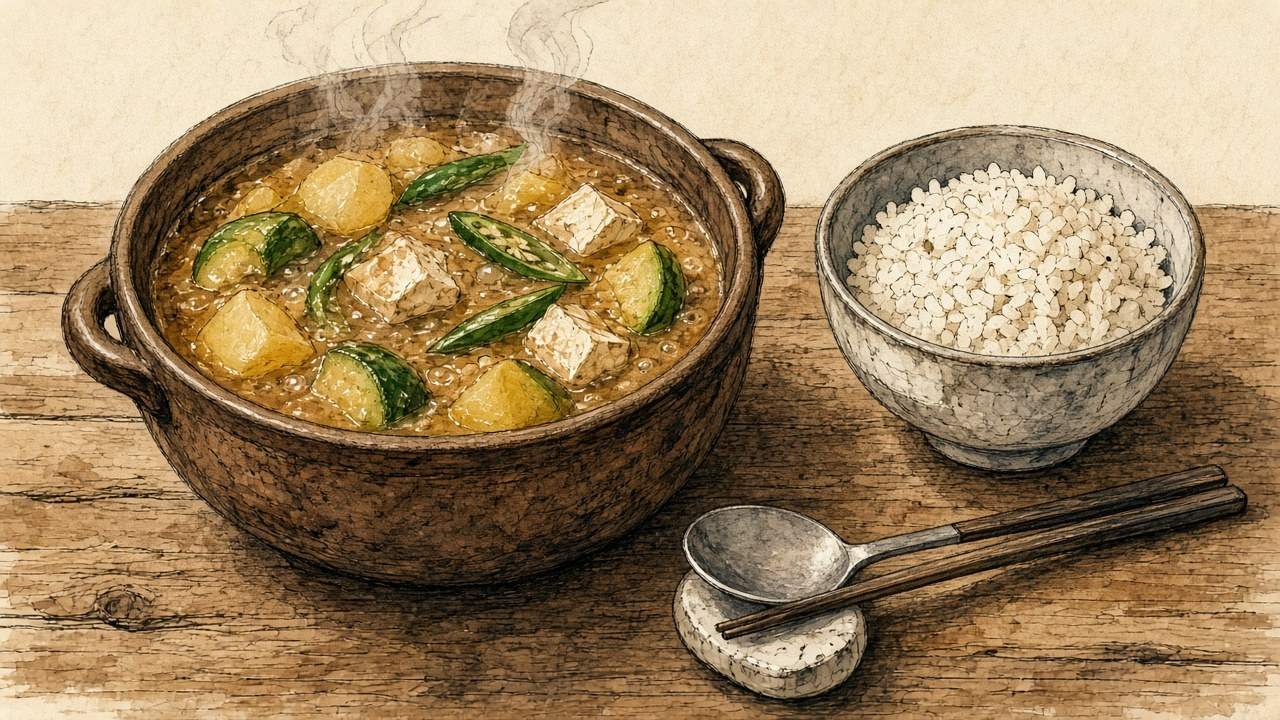
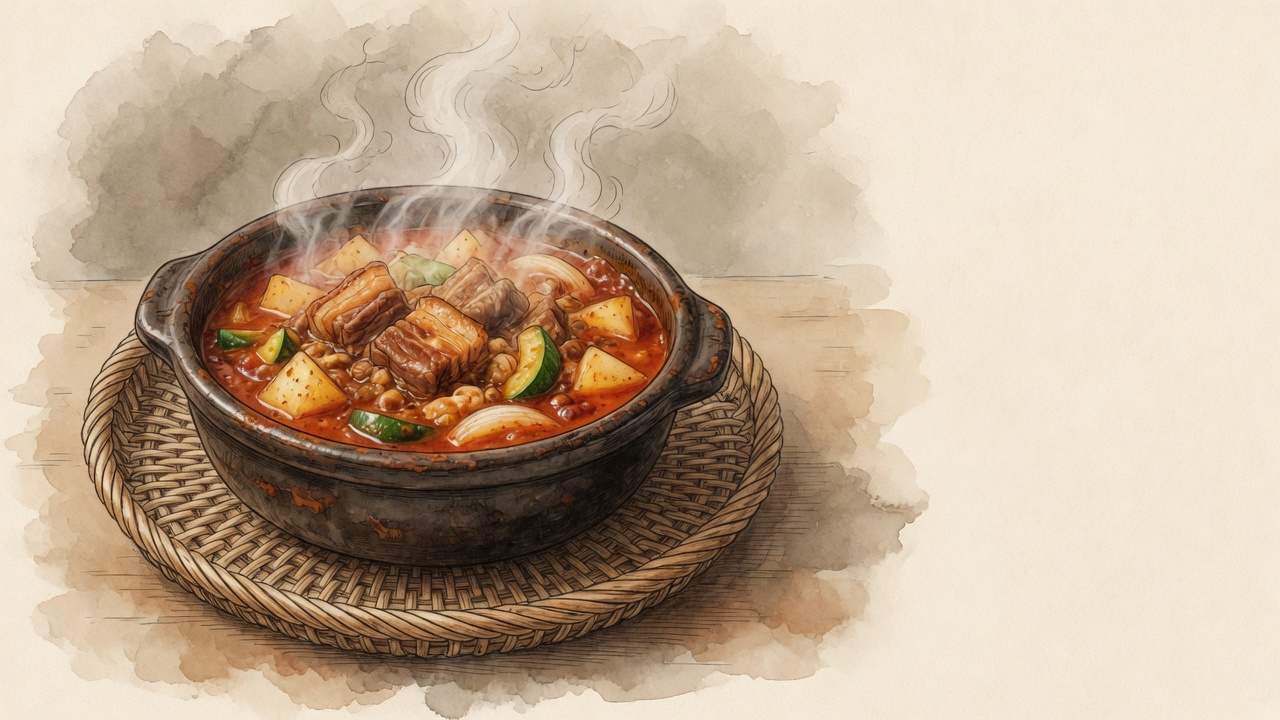
Gochujang Jjigae (Spicy Pork and Potato Stew)
Sauté the pork, then toast the gochugaru in the fat for color before adding water and gochujang. Cook the potatoes first and add the zucchini and onion later so they do not turn mushy.
한국어로 보기 (Korean version)
Steps
- 1
Cut the pork into bite-size pieces and the potato and zucchini into 1.5 cm cubes. Cut the onion into large chunks, and slice the leek and chili on the diagonal.
Cut away any sprouts or green parts on the potato.
- 2
Heat the oil in a pot over medium heat and sauté the pork for 3 minutes until the outside turns white. Add the gochugaru and garlic and stir briefly without letting them burn.
Toasting the gochugaru in oil gives the broth a brighter color and deeper flavor. It scorches fast, so turn the heat down a little.
- 3
Pour in the water, dissolve the gochujang, add the potato, and boil for 10 minutes.
- 4
Add the zucchini and onion and boil 5 minutes more, until a chopstick slides easily into the potato and the pork is cooked through.
- 5
Season with soup soy sauce, add the leek and chili, and boil 1 minute more.
Substitutions
| Instead of | Use | How |
|---|---|---|
| pork | 1 can tuna (150 g) | Drain the oil and add the tuna with the zucchini once the potato is cooked. In the sauté step, toast only the gochugaru in the oil. |
| Korean zucchini | 1/2 block tofu (about 150 g) or a handful of oyster mushrooms | Cube the tofu and add it with the zucchini, and avoid stirring so it does not break. |
Storing leftovers
By the next day the potatoes soak up the broth and break down, so the stew thickens. Cool it and refrigerate for up to 2 days; when you bring it back to a boil, add about 100 ml of water and taste for seasoning again. Potatoes turn grainy when frozen, so for longer storage, pick out the potatoes and freeze only the pork and broth, using it within 2 weeks.
Serve with
Rice, gyeran-mari (rolled omelet), and sigeumchi namul (seasoned spinach). The spicy broth goes well with mild sides.
Making more or less
Every gochujang has a different balance of sweet and salty, so add the soup soy sauce last, after tasting. When doubling the recipe, start with 1,000 ml of water and add more as needed.
Questions
Why does my gochujang stew taste heavy and pasty?
Too much gochujang makes the broth heavy from its starch and sweetness. Use less gochujang and more gochugaru, or mix in 1/2 Tbsp doenjang (Korean soybean paste) for a cleaner taste.
Can I use ham or Spam instead?
Yes. Blanch the ham in boiling water to remove some fat and add it once the potato is cooked. Ham is already salty, so skip the soup soy sauce and season after tasting.
More with the same ingredients