Stir-fries
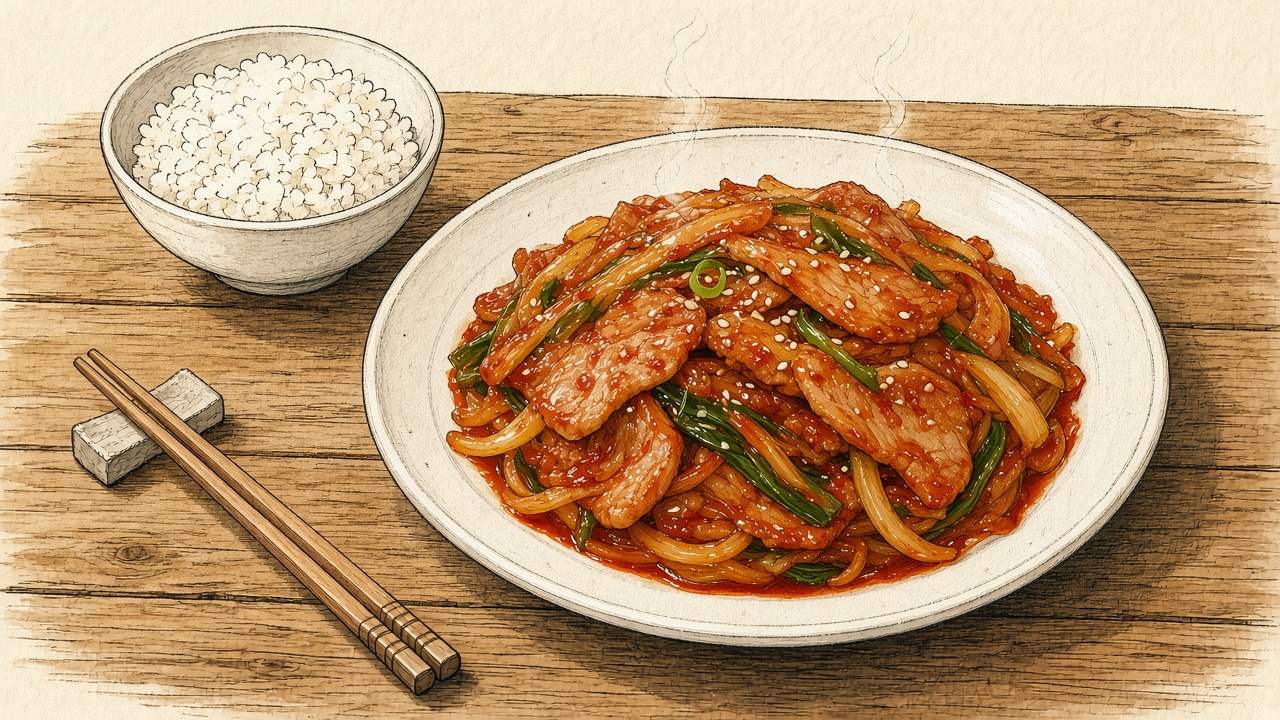
Jeyuk Bokkeum (Spicy Stir-fried Pork)
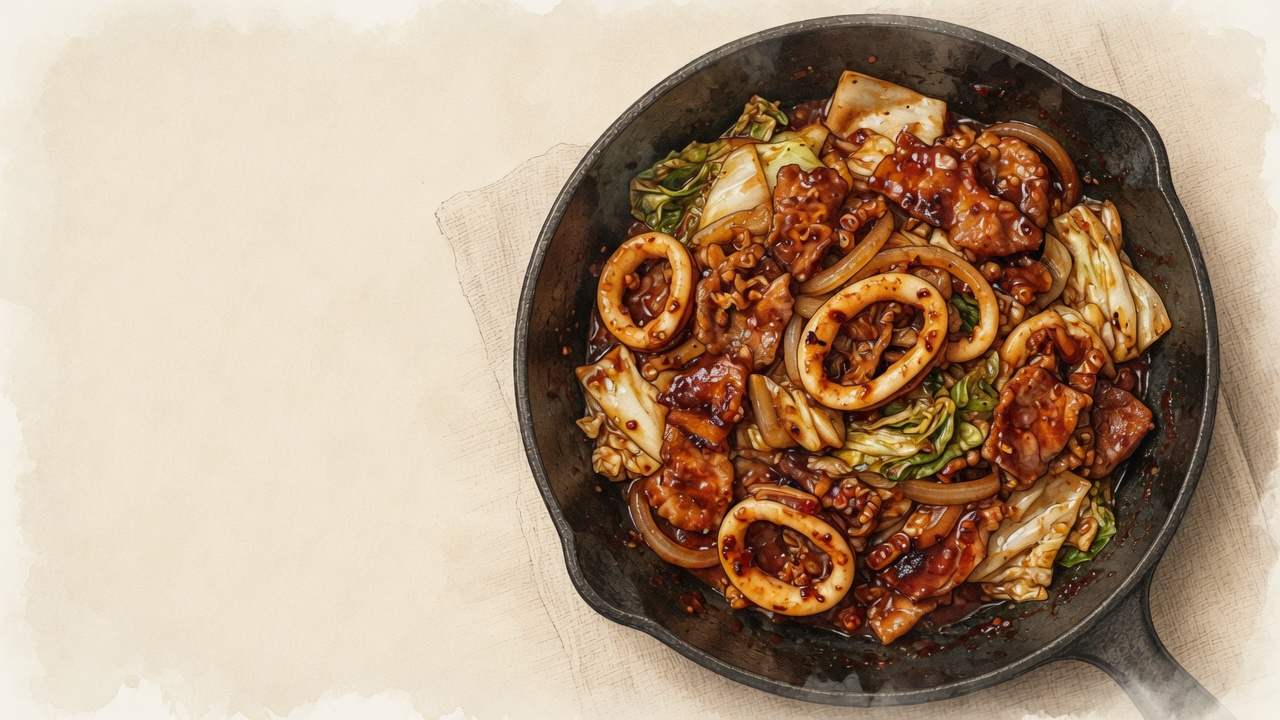
Cook the pork on its own first, before the sauce has a chance to burn. Once the pork is cooked, add the onion, kimchi, and chili and stir-fry over medium heat until glossy.
한국어로 보기 (Korean version)
Steps
- 1
Cut the pork into bite-size pieces, pat dry with paper towels, and toss with half of the gochujang, gochugaru, soy sauce, minced garlic, and sugar. Let sit for 10 minutes.
- 2
Cut the onion, chilies, kimchi, and leek into easy-to-eat pieces. Taste the chilies for heat and keep or remove the seeds.
If the onion is sliced too thin, it burns before the pork is done.
- 3
Heat the cooking oil in a pan over medium heat and stir-fry the pork for 6 minutes until fully cooked, with no pink inside.
- 4
Add the onion, kimchi, chilies, and the remaining sauce and stir-fry over medium heat for 5 minutes. When the liquid has reduced and the onion turns translucent, add the leek and sesame oil.
If the sauce starts sticking to the pan, add 2 Tbsp water and stir-fry once more.
Substitutions
| Instead of | Use | How |
|---|---|---|
| well-fermented kimchi | 1 cup (200 ml) finely chopped cabbage | You lose the sourness, so leave out the sugar and add 1 tsp vinegar at the end. |
| gochujang | an extra 1 Tbsp gochugaru | The sauce will be thinner, so cut the stir-fry time by 1 minute to keep it from drying out. |
Storing leftovers
As it cools, the pork fat turns white and solid and the seasoning soaks into the meat, making it saltier. Store in an airtight container in the refrigerator and eat within 2 days; to reheat, stir-fry with 1 Tbsp water over medium heat until hot all the way through. To keep it longer, freeze in single-meal portions and use within 2 weeks.
Serve with
Rice, lettuce, and doenjang-guk (soybean paste soup). If you'll wrap it in lettuce, season it a little stronger.
Making more or less
If you double the pork, stir-fry in two batches so it cooks evenly all the way through. Scale up the sauce too, but add the sugar to taste.
Questions
How do I adjust the heat in jeyuk bokkeum?
The heat comes mostly from the chilies and gochugaru. Removing the chili seeds and cutting the gochugaru to 1/2 Tbsp makes it milder; keep the gochujang the same so the sauce keeps its color and sweetness. If it's already too spicy, stir-fry and add more onion to soften it with sweetness.
What if the pork in jeyuk bokkeum turns out tough?
Pork shoulder is tender when sliced thinly against the grain, and it dries out and toughens if stir-fried too long. Add the vegetables as soon as the pork is cooked and finish within 5 minutes. A cut with a little fat attached is less dry.
More with the same ingredients