Soups & Stews
Doenjang Jjigae (Soybean Paste Stew)
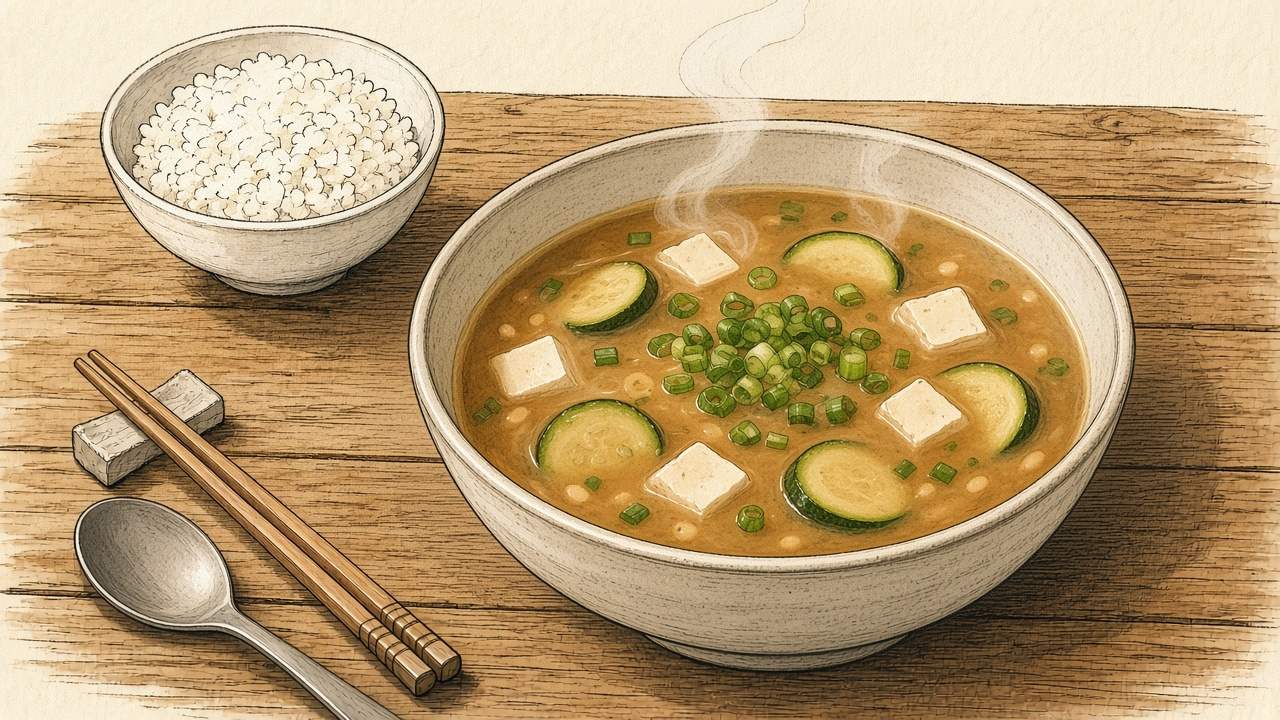
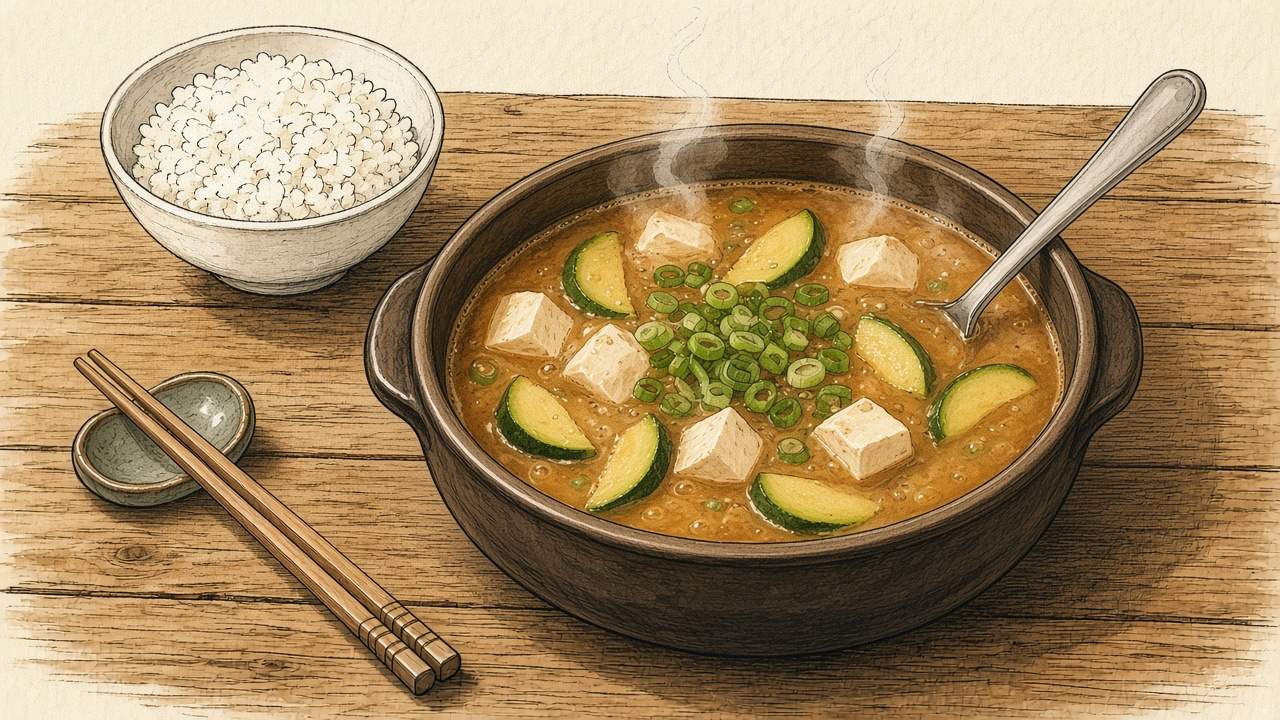
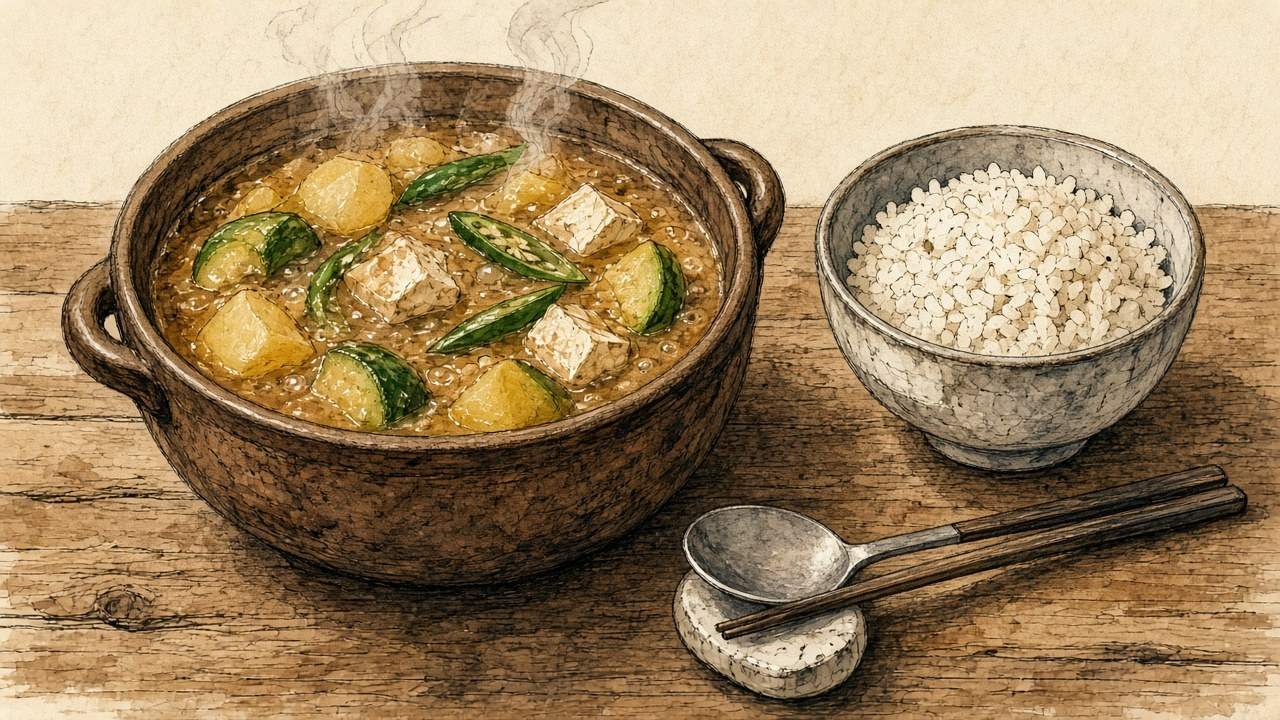
Make the anchovy broth first and dissolve the doenjang through a strainer. Add the firm potato and onion first, the zucchini and mushrooms later, and the tofu and chili in the last 3 minutes so each cooks just right.
한국어로 보기 (Korean version)
Steps
- 1
Put the water, the anchovies (guts removed), and the kelp in a pot, boil over medium heat for 10 minutes, then lift out the solids to make the broth.
Take the kelp out as soon as the water starts to boil so the broth doesn't turn slimy.
- 2
Cut out any sprouts and green parts from the potato and cut it, along with the zucchini, onion, and tofu, into 1.5 cm pieces. Trim the mushroom stems and tear the caps apart, and slice the chili and leek on the diagonal.
If the potato is cut too small, the stew turns cloudy.
- 3
Dissolve the doenjang into the broth through a strainer, add the potato and onion, and boil over medium heat for 5 minutes.
Lumps of doenjang make the seasoning uneven, so press them through with a spoon.
- 4
Add the zucchini, mushrooms, and garlic and boil 5 more minutes, until a chopstick slides easily into the potato.
- 5
Add the tofu, chili, leek, and gochugaru, boil for 3 minutes, taste, and turn off the heat.
If it's too salty, add a little water; if it's bland, dissolve in more doenjang half a spoonful at a time.
Substitutions
| Instead of | Use | How |
|---|---|---|
| anchovy broth | 500 ml rice-rinsing water | Rice-rinsing water gives a nuttier, slightly thicker broth. You can add the anchovies to it, too. |
| potato | 80 g Korean radish (mu) | Slice the radish thinly, add it when you'd add the potato, and boil until translucent. |
| oyster mushrooms | 2 shiitake mushrooms | Shiitake are more aromatic, so slice them thinly and add them at the same point. |
Storing leftovers
As it cools, the potato and tofu soak up the seasoning, the broth gets saltier, and the doenjang settles. Keep it airtight in the fridge and eat within 2 days; when reheating, add a little water and bring it to a full boil once, stirring. Potato and tofu change texture when frozen, so if you do freeze it, divide it into single-meal portions and use within 2 weeks.
Serve with
Rice, gyeran-mari (rolled omelet), and gim (roasted seaweed). If the stew is on the salty side, a tangy side like mu-saengchae (spicy radish salad) goes well.
Making more or less
When scaling up to 4 servings, don't double the doenjang all at once; start with 1.5 times and add more as you taste.
Before you cook
- Cut out any potato sprouts and green parts.
Questions
How do I fix doenjang jjigae that's too salty?
Every doenjang has a different saltiness, so the same amount can turn out salty. If it's already too salty, add 100 ml of water or broth and a little more tofu or zucchini and simmer. Next time, dissolve only 1½ Tbsp of doenjang first and add more at the end as you taste.
More with the same ingredients