Soups & Stews
Cheonggukjang Jjigae (Fermented Soybean Stew)
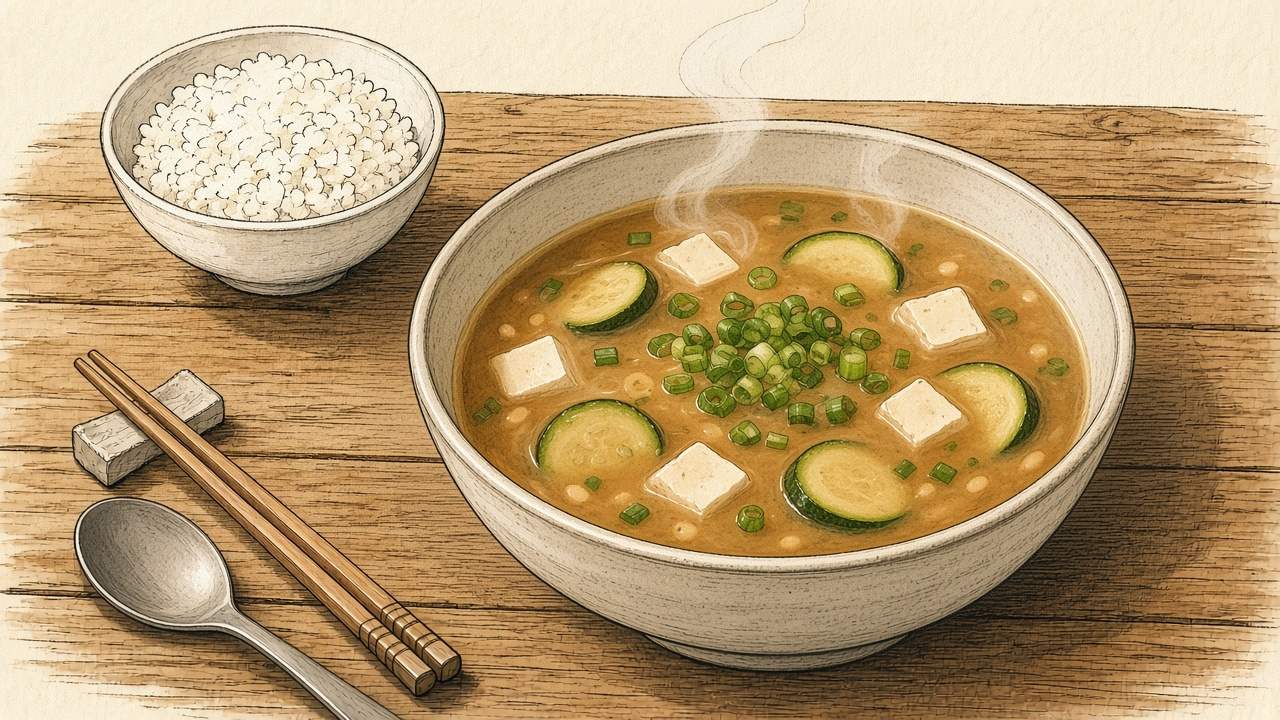
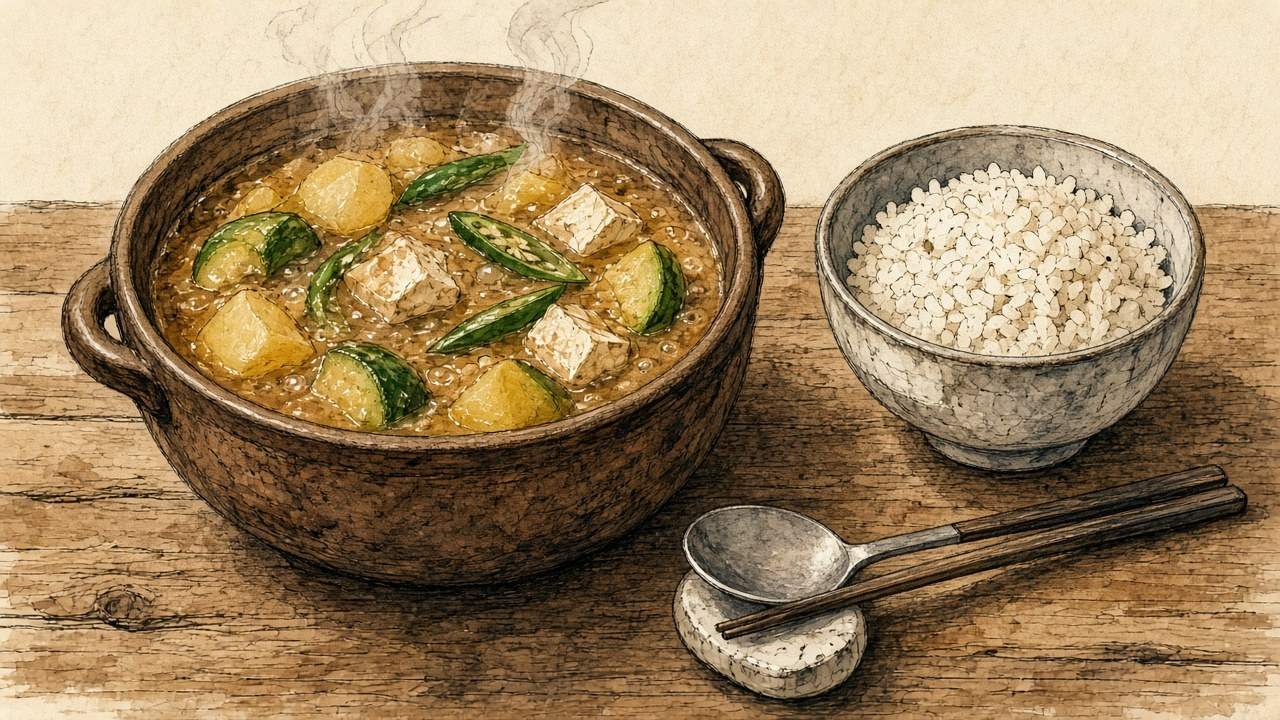
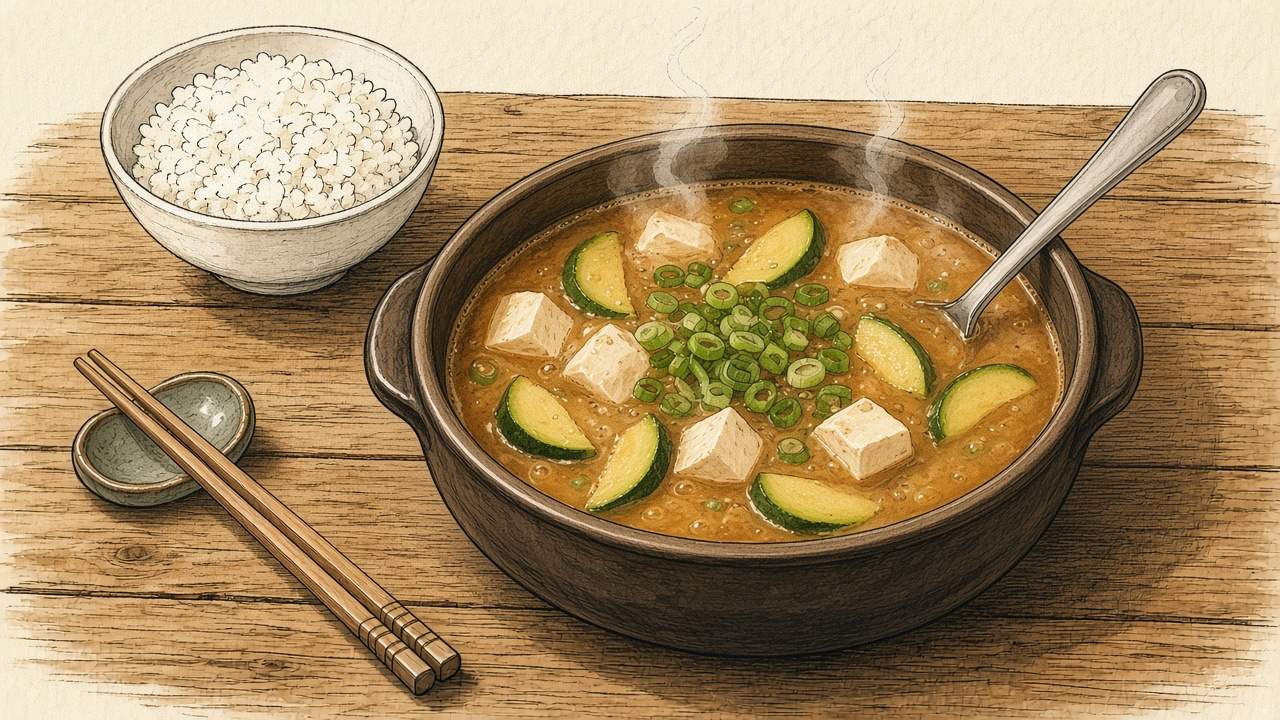
Dissolve the cheonggukjang (fast-fermented soybean paste) in anchovy broth and cook the zucchini and onion first, then add the tofu. Top with Cheongyang chili and Korean leek at the end for aroma.
한국어로 보기 (Korean version)
Steps
- 1
Put the anchovies and kelp in the water and boil over medium heat for 10 minutes to make the broth, then remove the solids.
- 2
Cut the zucchini, onion, and tofu into bite-size pieces, and slice the chili and leek on the diagonal.
- 3
Dissolve the cheonggukjang in the broth and boil over medium heat for 3 minutes, skimming off the foam.
If lumps remain, press them with a spoon to break them up.
- 4
Add the zucchini, onion, minced garlic, and gochugaru and boil for 5 minutes.
- 5
Add the tofu and boil for 3 minutes, then top with the chili and leek, boil 1 minute more, and turn off the heat.
If it's too salty, add water; if it's bland, dissolve in a little more cheonggukjang.
Substitutions
| Instead of | Use | How |
|---|---|---|
| cheonggukjang | 1½ Tbsp doenjang (Korean soybean paste) | With doenjang you lose the cheonggukjang aroma and get a nutty doenjang stew instead. |
| Korean zucchini | a handful of oyster mushrooms | Add the mushrooms at the same time as the zucchini. |
Storing leftovers
Each time cheonggukjang is reboiled, its aroma gets stronger and the broth reduces and gets saltier. Cover tightly so the smell doesn't spread to other foods, refrigerate, and eat within 2 days; add a little water and bring to a full boil before serving. Tofu changes texture when frozen, so if freezing, portion it per meal and use within 2 weeks.
Serve with
Rice, kimchi, and gyeran-mari (rolled omelet). The flavor is strong, so serve it with fresh, light namul (seasoned vegetables).
Making more or less
Cheonggukjang varies in saltiness by brand, so add only half first and add more to taste.
Before you cook
- Check the use-by date on packaged cheonggukjang.
Questions
Any tips for reducing the smell and foam in cheonggukjang jjigae?
The longer cheonggukjang boils, the stronger its aroma gets, and its sticky strands break down and foam. Dissolve it after the broth is already boiling and cook it briefly; holding back some and adding it just before turning off the heat keeps the smell milder while leaving its nutty flavor.
More with the same ingredients