Soups & Stews
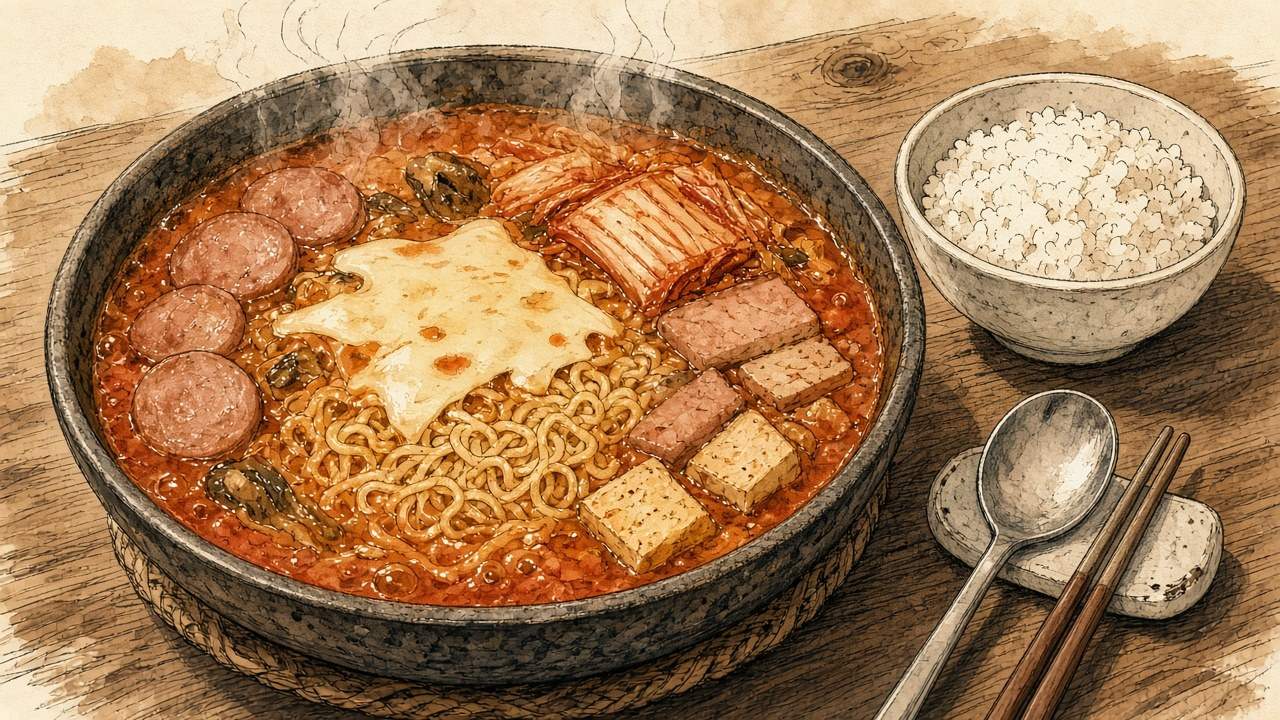
Budae Jjigae (Army Base Stew)
Blanch the canned ham and sausages once to remove excess fat, then arrange them in a pot with kimchi, tofu, and vegetables. Put the seasoning paste in the center, pour in the broth, and simmer; add the ramyeon noodles once the kimchi softens.
한국어로 보기 (Korean version)
Steps
- 1
Slice the ham and sausages 0.5 cm thick and blanch in boiling water for 30 seconds to remove excess fat.
Blanching makes the broth less greasy and takes away some of the saltiness.
- 2
Cut the kimchi into bite-size pieces, the tofu and onion into thick slices, and the leek and chili on the diagonal. Mix the gochugaru, gochujang, soy sauce, garlic, sugar, and pepper to make the seasoning paste.
Making the paste ahead and letting it sit about 10 minutes softens the gochugaru and mellows the broth.
- 3
Arrange the kimchi, onion, ham, sausages, and tofu around a wide pot, put the seasoning paste in the center, and pour in the 600 ml of broth.
- 4
Boil over medium heat for 10 minutes, and once the kimchi has softened, add the ramyeon noodles, leek, and chili.
- 5
Boil 3 more minutes, and when the noodles are cooked, top with the cheese and turn off the heat.
If the broth reduces while you eat, add broth 100 ml at a time and keep it simmering.
Substitutions
| Instead of | Use | How |
|---|---|---|
| ramyeon noodles | a handful of sliced rice cakes (tteokguk-tteok) | Add the rice cakes 2 minutes before you'd add the noodles and boil until soft. |
| anchovy and kelp broth | 600 ml beef bone broth (sagol) | Bone broth makes the soup richer and milkier, so add only half the soy sauce and taste. |
Storing leftovers
The ramyeon noodles soak up the broth and swell, so if you plan to have leftovers, set some aside before adding the noodles. Store airtight in the fridge and eat within 2 days; when reheating, bring it to a full boil once, then add the noodles. Frozen in single-meal portions without noodles, use within 2 weeks; tofu changes texture when frozen, so take it out and add fresh tofu when you reheat.
Serve with
A bowl of rice is all you need. For sides, something mild or tangy such as gyeran-mari (rolled omelet) or a cucumber salad goes well.
Making more or less
For 4 servings, double the ingredients, but start with 1 liter (1000 ml) of broth so the pot doesn't boil over, and add more as it reduces.
Questions
When do I add the ramyeon noodles to budae jjigae?
Add them after boiling for 10 minutes, once the kimchi has softened, and cook for just 3 minutes. If you add them at the start, the noodles soak up the broth, so it shrinks and turns thick. When adding more noodles while eating, add 100 ml of broth first, then the noodles.
More with the same ingredients