Side Dishes
Suyuk (Boiled Pork Belly)
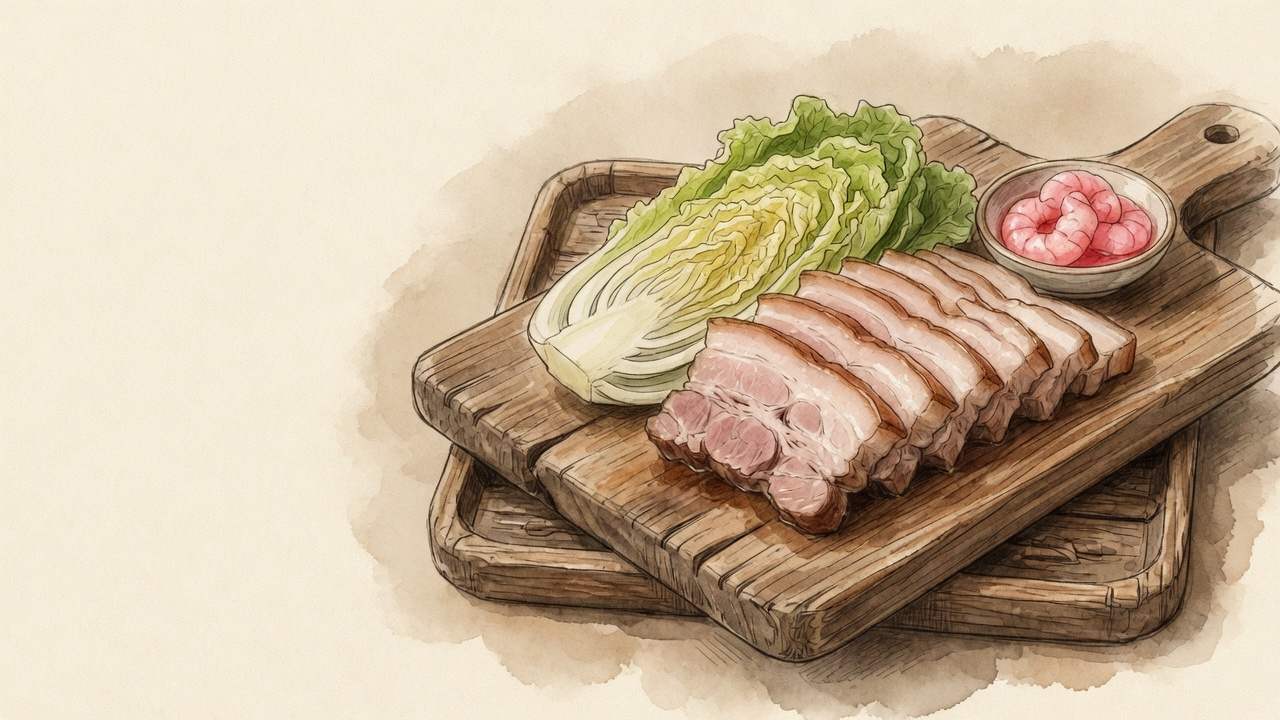
Once the water with doenjang, onion, leek, garlic, and ginger is boiling, add the whole pork belly and simmer over medium-low heat for 50 minutes. Rest it briefly in the broth after turning off the heat so it slices moist, and serve with napa cabbage leaves and salted shrimp.
한국어로 보기 (Korean version)
Steps
- 1
Pat the pork dry with paper towels to remove any blood, and if it is thicker than 7 cm, cut it against the grain into two pieces. Halve the onion, cut the leek into large pieces, and slice the ginger.
- 2
Pour 2 L water into a large pot, dissolve the doenjang, add the onion, leek, garlic, ginger, peppercorns, and bay leaves, and bring to a boil over high heat.
- 3
When the water is at a rolling boil, add the pork. Once it returns to a boil, lower the heat to medium-low, cover, and simmer for 50 minutes, turning the meat once halfway.
Adding the meat to boiling water sets the outside first so less juice escapes. A hard boil the whole time makes the meat dry, so keep it at a gentle bubble.
- 4
Poke the thickest part with a chopstick; when the juices run clear with no red and the meat is cooked through, turn off the heat. Leave it in the broth, covered, for 10 minutes.
A short rest in the broth keeps the surface from drying out and firms the meat so it doesn't fall apart when sliced.
- 5
Separate the napa cabbage leaves, wash, and shake dry. Lift out the pork, slice it against the grain 0.7 cm thick, and serve with the salted shrimp and cabbage.
Slice with long strokes in one direction so the fat and lean stay together.
Substitutions
| Instead of | Use | How |
|---|---|---|
| pork belly | 1 kg pork shoulder (front leg) | Leaner and milder. Simmer 10 minutes longer, and don't skip the 10-minute rest in the broth, or it will be dry. |
| doenjang | 3 Tbsp mirim (cooking rice wine) | Without doenjang, mirim takes care of the porky smell. The color will be a little lighter. |
| baby napa cabbage | lettuce, perilla leaves, or napa cabbage kimchi | Swap the wraps, or serve with well-fermented kimchi. |
Storing leftovers
Sliced ahead, the cut sides dry out, and as it cools the fat turns white and firm. Wrap leftover pork whole in plastic wrap, refrigerate, and eat within 3 days; slice only what you need and steam it for 5 minutes until hot in the center. If microwaving, sprinkle with a little water and cover. To keep it longer, freeze in single portions for up to 2 weeks, thaw in the fridge, then steam.
Serve with
Baby napa cabbage, salted shrimp, and kkakdugi or geotjeori (fresh kimchi). Salty shrimp and crunchy kimchi cut the richness of the pork.
Making more or less
Adding more meat doesn't change the simmering time, which depends on the thickness of each piece. For 2 kg, cut it into two pieces, use plenty more water, and simmer for the same time.
Questions
Why is my suyuk dry?
Usually it is lean hind leg meat, a hard rolling boil, or slices cut too early that dried out. Use pork belly or shoulder with some fat, and keep the meat whole until right before slicing.
Why do people add coffee or soju when boiling suyuk?
1 tsp instant coffee gives the meat an appetizing color and tones down the porky smell. 100 ml soju also helps with the smell. Neither is needed; doenjang and the aromatics are enough.
More with the same ingredients