Braised Dishes
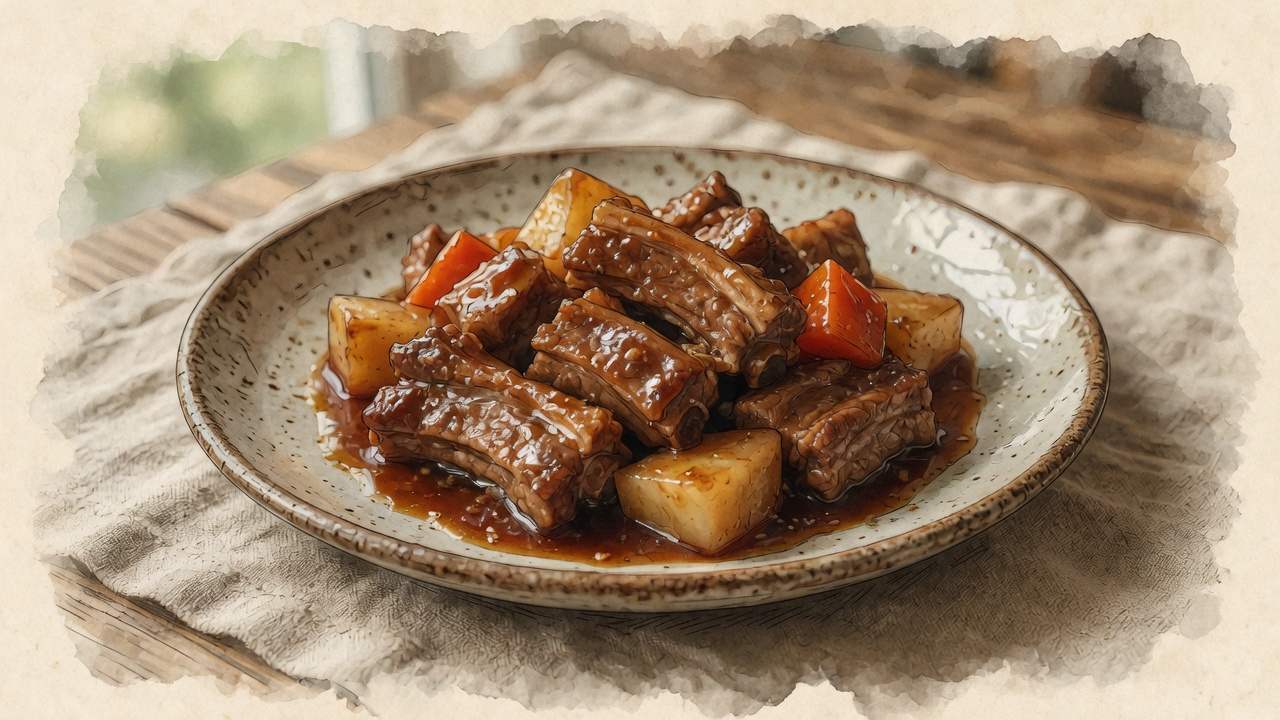
Dwaeji Galbi-jjim (Braised Pork Ribs)
Soak the pork ribs to draw out the blood and blanch them once to cut down the gamey smell, then braise them covered in a soy sauce and ginger sauce. Add the potatoes and carrots only after the meat has softened so they hold their shape, and uncover at the end to reduce the sauce.
한국어로 보기 (Korean version)
Steps
- 1
Soak the pork ribs in cold water for 30 minutes to draw out the blood, changing the water once.
Trim off any thick chunks of fat with kitchen shears so the sauce is less greasy.
- 2
While the ribs soak, cut the potatoes and carrot into large chunks and round off the corners, cut the onion into thick pieces, and cut the leek into 5 cm lengths.
- 3
Blanch the ribs in boiling water for 5 minutes, discard the water, and rinse the ribs in cold water, getting between the bones.
- 4
In a pot, mix the soy sauce, sugar, minced garlic, ginger, mirim, pepper, and 600 ml water, then add the ribs. When it boils, cover and braise over medium-low heat for 30 minutes.
Turn the ribs over once halfway so they season evenly.
- 5
Add the potatoes and carrot, cover, and braise 15 minutes more, until a chopstick slides easily into the potatoes.
- 6
Add the onion, leek, and syrup and simmer uncovered over medium heat for 10 minutes. Check that the meat next to the bone is cooked through with no pink, then drizzle with sesame oil, sprinkle with sesame seeds, and serve.
From here on, don't stir; spoon the sauce over the top instead so the potatoes don't break apart.
Substitutions
| Instead of | Use | How |
|---|---|---|
| potatoes | 300 g Korean radish (mu) | Radish takes longer to soften, so add it with the meat in step 4 instead of later. |
| syrup | 1 Tbsp sugar | Similar sweetness, a little less shine. |
| pork ribs | 800 g boneless pork shoulder (neck) in one piece | Cut into fist-sized chunks and braise in the same order. With no bones, 15 minutes of soaking is enough. |
Storing leftovers
The potatoes soak up the sauce, so by the next day there is much less of it and the potatoes break easily. Cool, refrigerate, and eat within 3 days; to reheat, add 3 to 4 Tbsp water, cover, and heat over medium-low until the meat is hot in the center. To keep it longer, leave out the potatoes and freeze the meat and sauce in single portions for up to 2 weeks. Potatoes turn grainy when frozen.
Serve with
Rice, kkakdugi (cubed radish kimchi), and sigeumchi-namul (seasoned spinach). The sauce is sweet and salty, so a tangy kimchi and a mild vegetable side balance it.
Making more or less
For 2 servings, use 600 g ribs, two-thirds of the sauce, and 400 ml water in a smaller pot. In a big pot the liquid is too shallow and scorches as it reduces.
Questions
How do I make a spicy version?
Add 2 Tbsp gochugaru (Korean chili flakes) and 1 Tbsp gochujang (Korean chili paste) to the sauce and cut the soy sauce by 1 Tbsp. Slice 2 Cheongyang chilies on the diagonal and add them with the onion for extra kick.
The meat won't come off the bone. What went wrong?
It was braised too briefly or over too high a heat. Add 100 ml water, cover, and keep it on low heat for another 15 minutes, and the meat will pull away from the bone easily.
More with the same ingredients