Soups & Stews
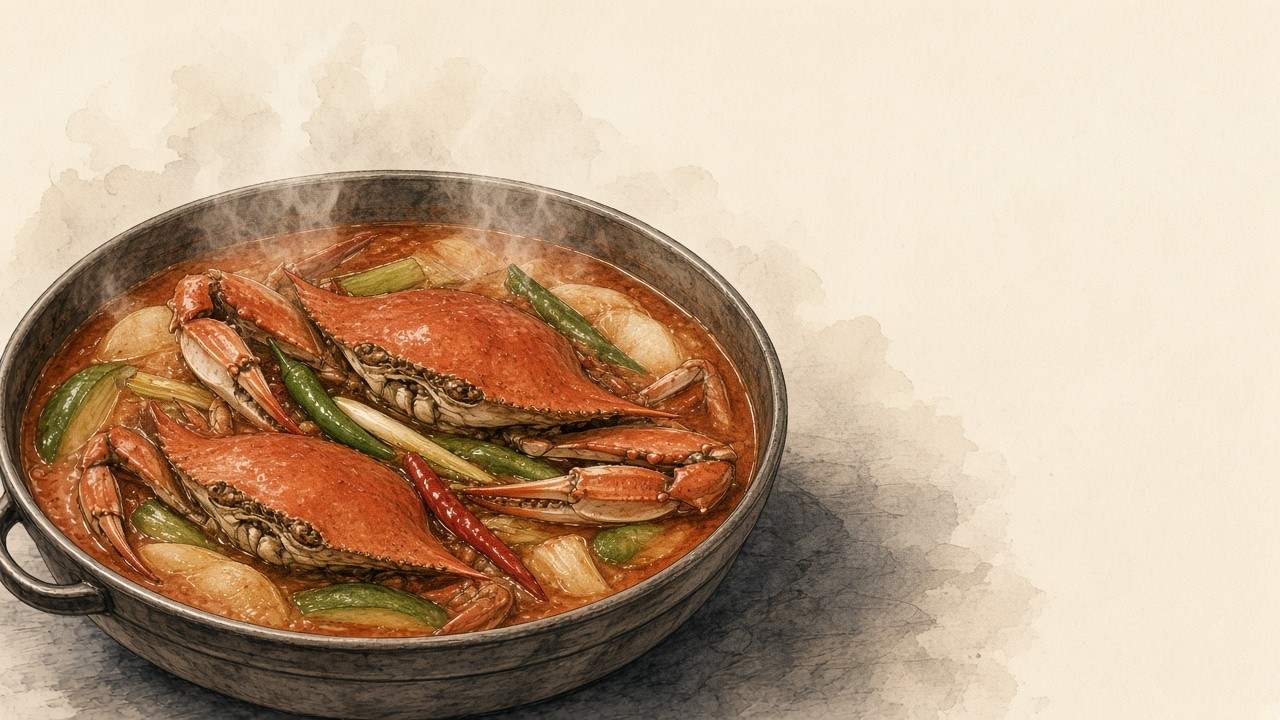
Kkotgetang (Spicy Blue Crab Stew)
Scrub the crabs, remove the gills, and cut them in half. Simmer the radish first in broth seasoned with doenjang and gochujang for a clean, refreshing flavor, then add the crabs and cook until the shells turn red and the meat is white and cooked through.
한국어로 보기 (Korean version)
Steps
- 1
Scrub the top shell, belly, and legs of the crabs with a brush. Pull off the belly flap and the top shell, then cut away the gray gills and the mouth parts. Trim the leg tips and cut each body in half.
Don't throw out the yellow innards inside the top shell; add them to the broth for extra savory depth. Wear gloves so the claws don't pinch you.
- 2
Put the 1.2 liters of water and the radish, cut into thin squares, in a pot. Stir in the doenjang and gochujang and boil over medium heat for 10 minutes, until the radish turns translucent.
- 3
Add the crabs, top shells, gochugaru, garlic, and ginger. When it comes to a boil, skim off the foam, then cook over medium heat for 10 minutes, until the shells are red and the meat is opaque white.
Skimming the foam keeps the broth clean and cuts the fishy smell.
- 4
Add the zucchini and onion, cut into half-moons, and the chilies, sliced on the diagonal. Boil for 5 minutes, then season with the soup soy sauce and salt.
- 5
Top with the leek and crown daisy greens, boil for 1 more minute, and serve.
Substitutions
| Instead of | Use | How |
|---|---|---|
| live blue crabs | 3 cleaned frozen blue crabs | Rinse off just the surface ice under running water and add them straight in. Cook 2 to 3 minutes longer and check that the meat is white all the way through. |
| crown daisy greens | water dropwort (minari) or the green part of a Korean leek | Add the aromatic greens only in the last minute, just long enough to wilt them. |
Storing leftovers
This is seafood, so don't keep it long. Let it cool, store it airtight in the fridge, and eat within 1 day. When reheating, bring the broth to a full boil and heat until the crab meat is hot all the way through. Each reheat makes the zucchini softer and the crab meat drier, so reheat only what you'll eat. Don't freeze the finished stew; if you need to keep raw crabs longer, clean them and freeze them sealed.
Serve with
Rice, gyeran-mari (rolled omelet), and a cucumber salad. The broth is spicy, so a mild egg dish or a crunchy salad goes well.
Making more or less
For 4 to 5 servings, use 5 crabs and 1.8 liters (1800 ml) of water, and increase the seasonings by 1.5 times.
Before you cook
- Boil the crabs until the shells turn red and the meat is opaque white.
- If raw crabs that are no longer alive smell of ammonia, don't use them.
Questions
How do I get rid of the fishy smell in crab stew?
Most of the fishy smell comes from the gills, the area around the mouth, and the foam that rises as it boils. Remove the gills cleanly, skim the foam, and once the crabs are in, cook only about 10 minutes so the meat doesn't get tough. The doenjang and ginger cover any remaining smell.
More with the same ingredients