Braised Dishes
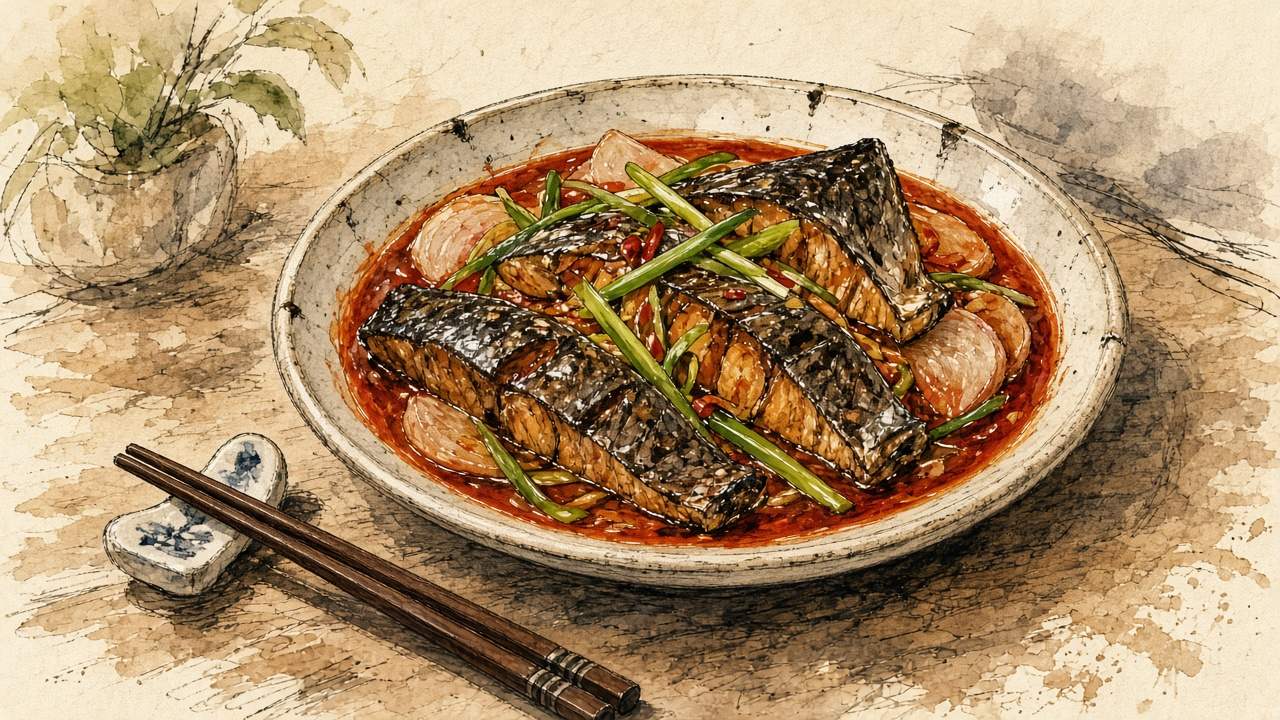
Godeungeo-jorim (Braised Mackerel with Radish)
Half-cooking the radish before adding the mackerel lets the radish soak up the fish flavor while the mackerel stays intact. Don't flip the fish — just spoon the sauce over it so it cooks right to the bone — and add the leek and chili at the end.
한국어로 보기 (Korean version)
Steps
- 1
Trim the fins from the mackerel, scrape out the black membrane and blood clots inside the belly, rinse, and cut into 4–5 pieces. Soaking in rice-rinsing water for 10 minutes reduces the fishy smell.
If any of the black membrane is left, the sauce turns bitter and fishy.
- 2
Cut the radish into 1.5 cm thick half-moons, thickly slice the onion, and cut the leek and chili on the diagonal. Mix the gochugaru, soy sauce, minced garlic, minced ginger, sugar, and mirim to make the sauce.
Thinly sliced radish turns mushy before the mackerel is cooked.
- 3
Line the bottom of a wide pot with the radish, add the water and half the sauce, cover, and simmer over medium heat for 10 minutes to half-cook the radish.
- 4
Lay the mackerel and onion on the radish, spoon over the remaining sauce, cover, and braise over medium heat for 12 minutes, basting with the liquid two or three times along the way.
Flipping the mackerel often breaks up the flesh, so just spoon the sauce over it.
- 5
Top with the leek and chili and simmer uncovered for 3 minutes more. Turn off the heat once the mackerel is cooked through and the flesh comes away easily from the bone.
Substitutions
| Instead of | Use | How |
|---|---|---|
| Korean radish | 2 potatoes | Cut out sprouts and green parts, and precook them 2 minutes less than the radish. |
| mackerel | 2 Pacific saury | Saury is thinner, so braise it 3 minutes less than mackerel. |
| sugar | 1 Tbsp oligosaccharide syrup | Add the syrup in the last 3 minutes for shine. |
Storing leftovers
Fish doesn't keep long. Store airtight with its sauce in the fridge and eat within 1–2 days; reheat over medium heat, basting with the sauce, until hot to the center. Each reheating breaks up the flesh and brings out more fishy smell, so reheat only what you'll eat. Don't freeze the finished dish — freeze only cleaned raw mackerel in portions.
Serve with
Rice, miyeok-guk (seaweed soup) or doenjang jjigae (soybean paste stew), and sigeumchi-namul (seasoned spinach). The braised radish counts as a side dish of its own.
Making more or less
With two fish, use a wider pot and lay the mackerel in a single layer without overlapping.
Before you cook
- Use fresh mackerel and cook it right after cleaning.
Questions
How do I reduce the fishy smell of godeungeo-jorim?
Much of the fishy smell comes from the black membrane and blood clots inside the belly. Scrape them out cleanly with a spoon and soak the fish in rice-rinsing water. If it's still fishy, add a little more minced ginger and braise the last 3 minutes uncovered to let the fishy steam escape.
More with the same ingredients