Soups & Stews
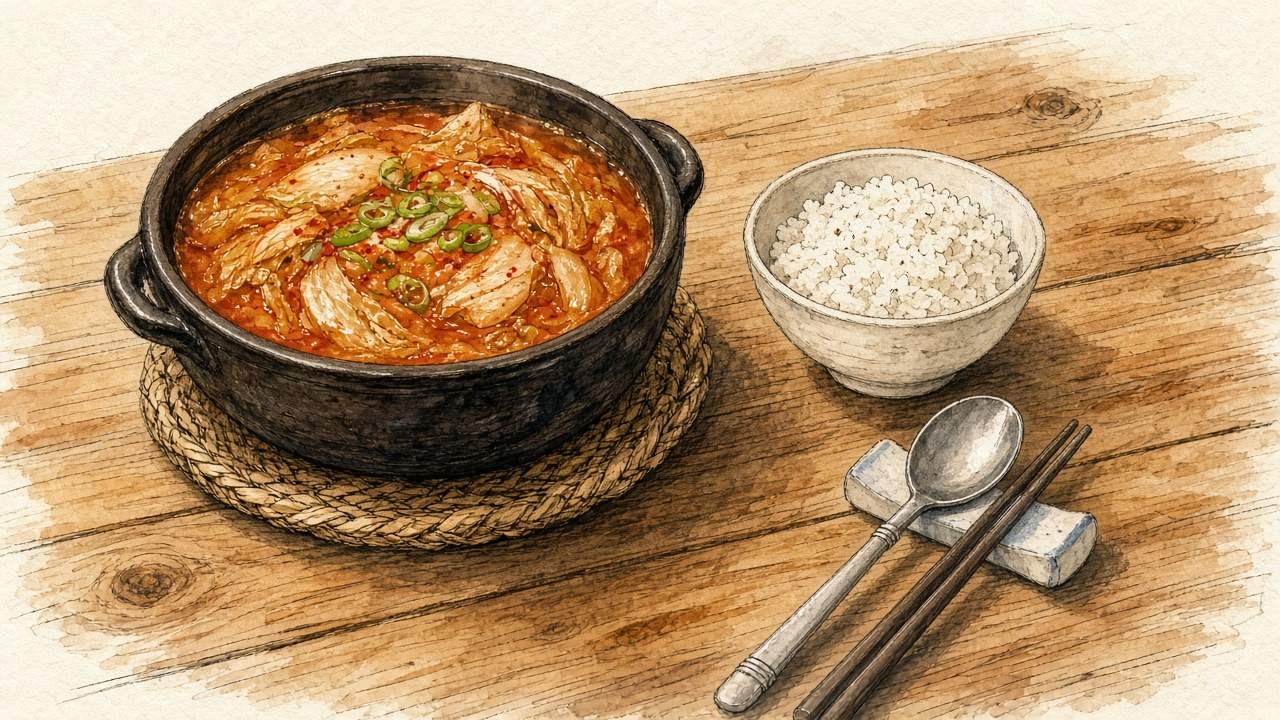
Kimchi Jjigae (Kimchi Stew)
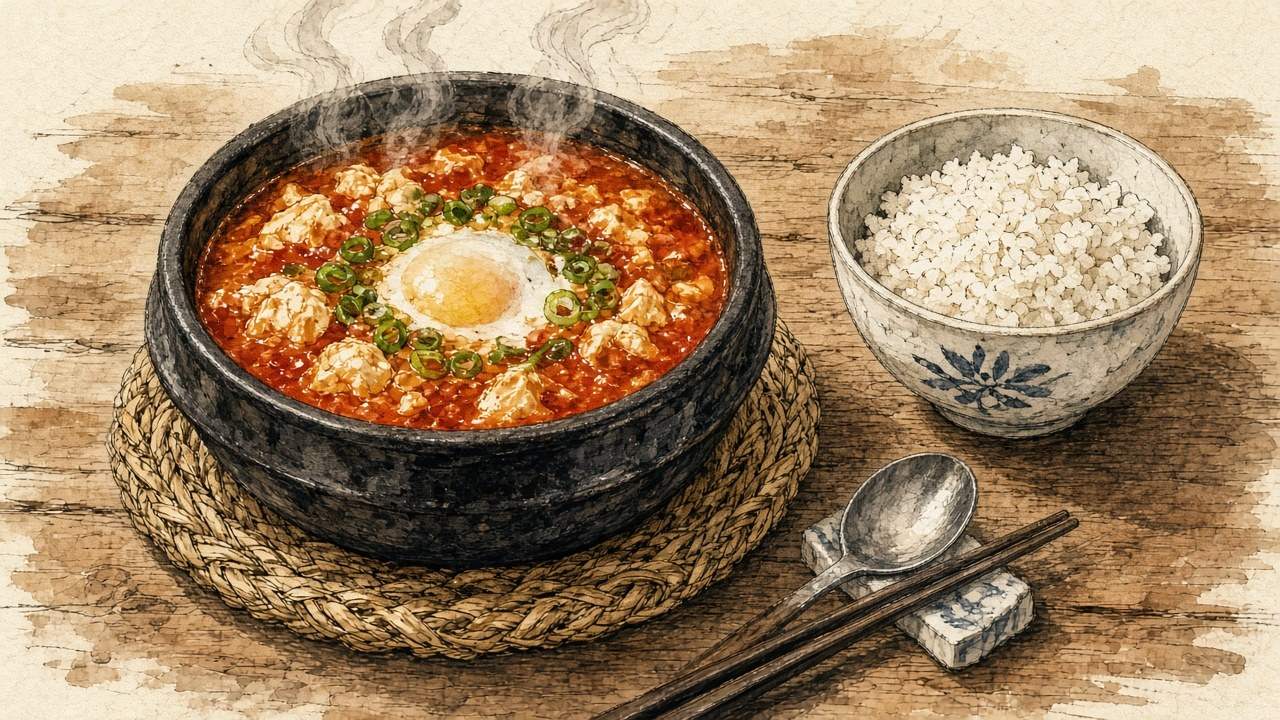
Stir-fry the pork until cooked first, then add the sour kimchi and water. Add the tofu in the last 5 minutes so it doesn't break apart, and if the broth is salty, add a little water.
한국어로 보기 (Korean version)
Steps
- 1
Pat the pork dry and cut it into bite-size pieces. Chop the kimchi, keeping a little of its juice, and cut the onion and tofu into thick pieces.
Press the tofu lightly with a paper towel to remove excess water.
- 2
Heat the oil in a pot over medium heat and stir-fry the pork for 4 minutes until fully cooked with no pink inside.
- 3
Add the kimchi, onion, gochugaru, and minced garlic and stir-fry over medium heat for 3 minutes, until the edges of the kimchi turn translucent.
- 4
Add the water and guk-ganjang and simmer over medium heat for 15 minutes, then add the tofu and leek and simmer 5 minutes more.
Skim off the foam, and don't stir the tofu hard.
Substitutions
| Instead of | Use | How |
|---|---|---|
| pork shoulder | 150 g pork collar (neck) | Pork collar is fattier, so stir-fry it 1 minute longer and skim off some of the fat. |
| tofu | 1 cup (200 ml) soft tofu (sundubu) | Simmer soft tofu for only the last 3 minutes so it doesn't fall apart. |
Storing leftovers
As it cools, the kimchi soaks up the broth, the flavor deepens, and the broth reduces. Store airtight in the fridge and eat within 2 days; when reheating, add a little water and bring it to a rolling boil all the way through. Tofu turns spongy and changes texture when frozen, so if you freeze it, divide into single portions and use within 2 weeks.
Serve with
Rice. Since the stew already has kimchi, pair it with something of a different texture, like a fried egg or kongnamul-muchim (seasoned soybean sprouts).
Making more or less
To make 4 servings, use a bigger pot and double the pork and kimchi. Add only enough water to cover the ingredients and adjust at the end.
Questions
What if my kimchi jjigae broth is too salty?
How salty sour kimchi and its juice are varies from kimchi to kimchi. If it's already salty, add water 100 ml at a time and simmer with a little more tofu or onion to spread the seasoning. Next time, leave out the guk-ganjang, then taste at the end and add it if needed.
My kimchi jjigae is too sour.
Very sour kimchi makes a sour broth. Add 1/2 tsp sugar when stir-frying the kimchi and cook 1–2 minutes longer to mellow the sourness; adding a bit more onion also helps, as its sweetness masks the sourness.
More with the same ingredients