Noodles
Jjolmyeon (Spicy Chewy Noodles)
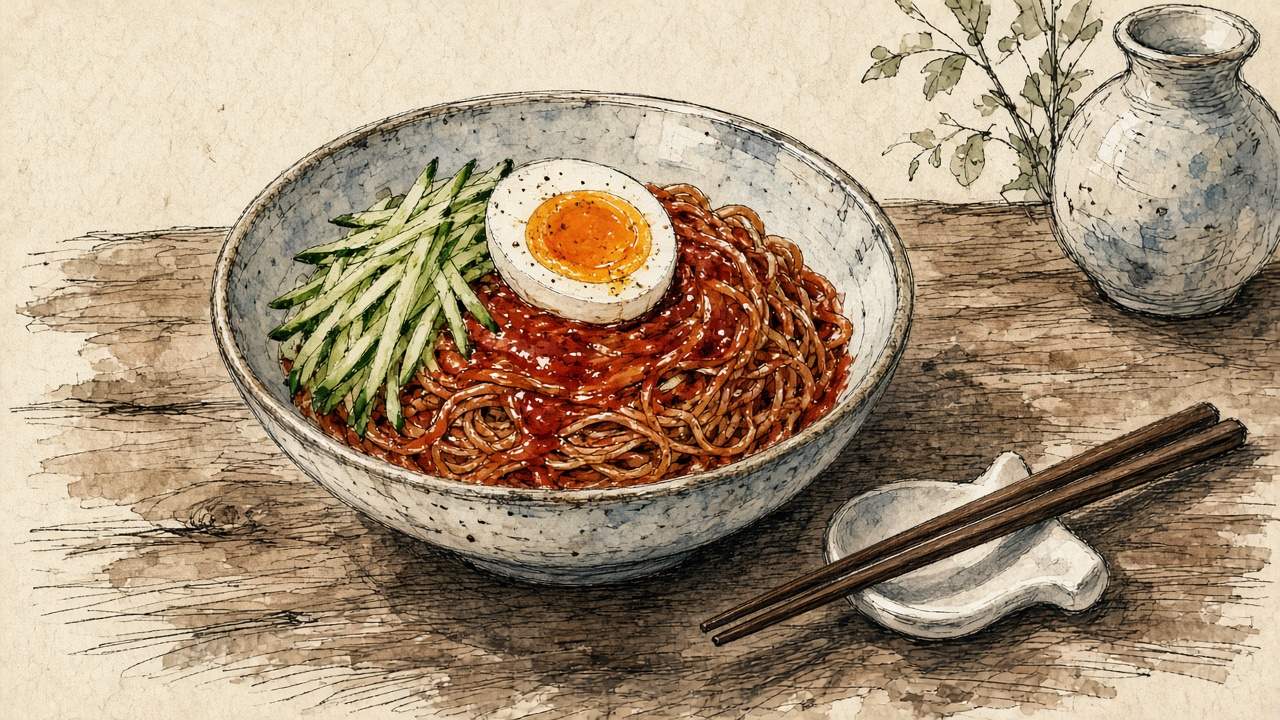
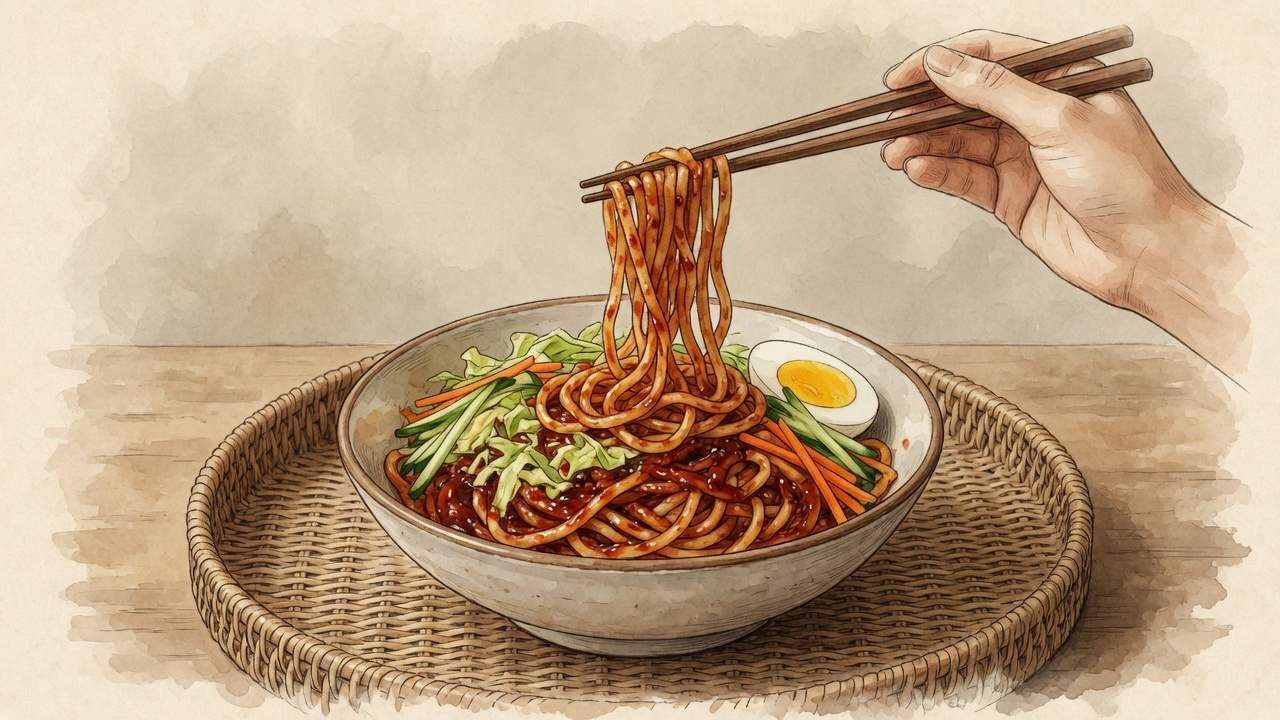
Make the sweet and tangy gochujang, vinegar, and sugar sauce first, and cut the cabbage, cucumber, and carrot into fine strips. Loosen the noodles before boiling and rub them under cold water afterward for the best chew, then top with a hard-boiled egg and mix.
한국어로 보기 (Korean version)
Steps
- 1
Mix the gochujang, gochugaru, vinegar, sugar, syrup, soy sauce, minced garlic, and sesame oil into a sauce and chill it in the fridge while you prep the vegetables.
Made the day before, the chili flakes plump up and the flavors meld even better.
- 2
Lower the eggs into boiling water and cook over medium heat for 12 minutes until hard-boiled, then cool in cold water, peel, and halve.
- 3
Cut the cabbage, cucumber, and carrot into fine strips. Soak the cabbage in cold water for 5 minutes, then drain well.
A cold soak makes the cabbage crisp and takes away its raw edge.
- 4
Pull the noodle strands apart by hand, drop them into boiling water, stir right away, and boil over high heat for 4 minutes. Rub them under cold water several times to wash off the starch, then drain well.
Jjolmyeon noodles stick together easily, so loosen them well first. Cooking times vary by package, so check yours too.
- 5
Put the noodles in bowls, top with the vegetables, sauce, and boiled egg, and sprinkle with sesame seeds. Mix just before eating.
Substitutions
| Instead of | Use | How |
|---|---|---|
| jjolmyeon noodles | 200 g thin wheat noodles (somyeon) | Boil somyeon for just 3 minutes and rinse in cold water. Less chewy, but the sauce suits it just as well. |
| cucumber | 5 perilla leaves or lettuce | Cut into fine strips and pile on top for a fresh aroma. |
| syrup | 1/2 Tbsp sugar | Similar sweetness, slightly thinner sauce. |
Storing leftovers
Once mixed, the noodles absorb the sauce and stiffen until they snap, so it is best not to have leftovers. It is a cold dish eaten without reheating, so to prepare ahead, make a big batch of just the sauce, store it airtight in the fridge, and use it within 5 days for bibim guksu or seasoned salads. Keep boiled eggs in their shells in the fridge for up to 2 days and cut vegetables for 1 day. Do not freeze the cooked noodles or the sauce.
Serve with
Eomuk-guk (fish cake soup), fried dumplings, or kimbap. The noodles are spicy and tangy, so a warm, mild broth suits them.
Making more or less
One serving is 200 g noodles. When making more, mix in two-thirds of the sauce first and add more after tasting; water from the vegetables can make it bland.
Questions
Why are my jjolmyeon noodles hard and tough?
They were either undercooked or left too long after rinsing and firmed up. Boil 30 seconds longer than the package says and toss with the sauce right after rinsing for noodles that are chewy but tender.
Do people add lemon-lime soda to the sauce?
Adding 2 Tbsp lemon-lime soda brings extra sweetness and a slight fizz. If you do, cut the sugar to 1 Tbsp to keep the sweetness balanced.
More with the same ingredients