Noodles
Rabokki (Spicy Rice Cakes with Ramyeon)
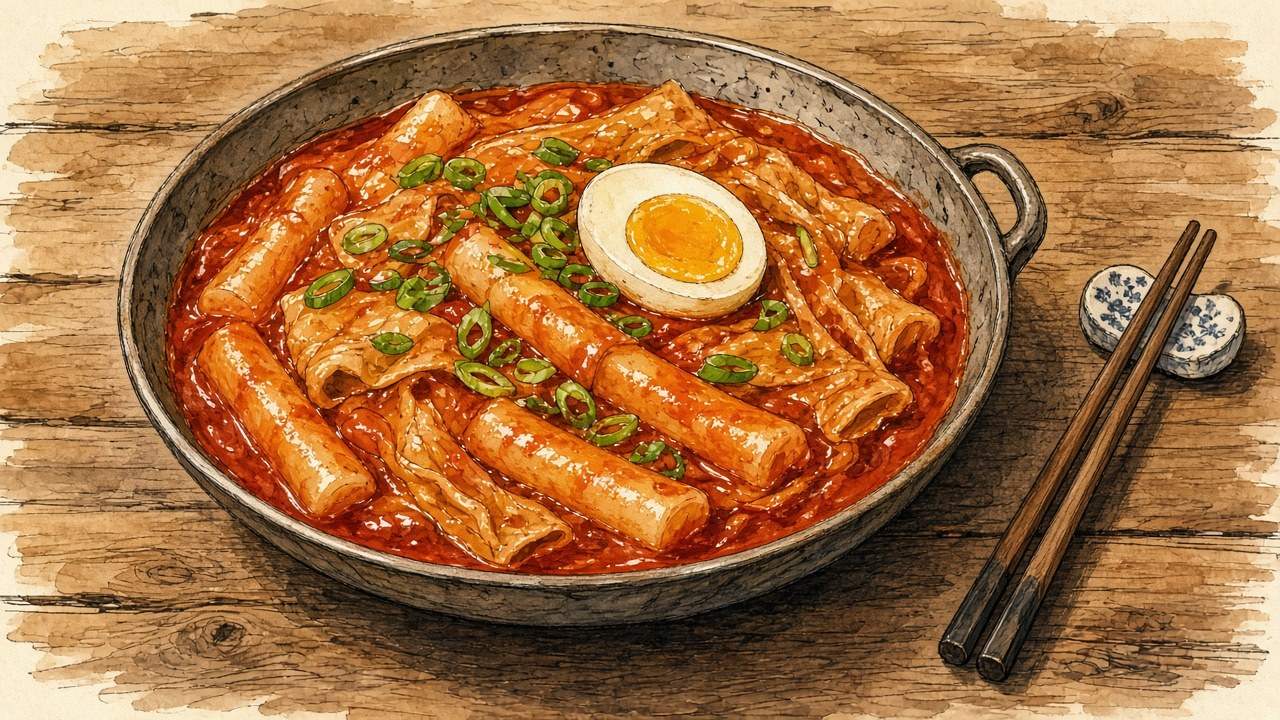
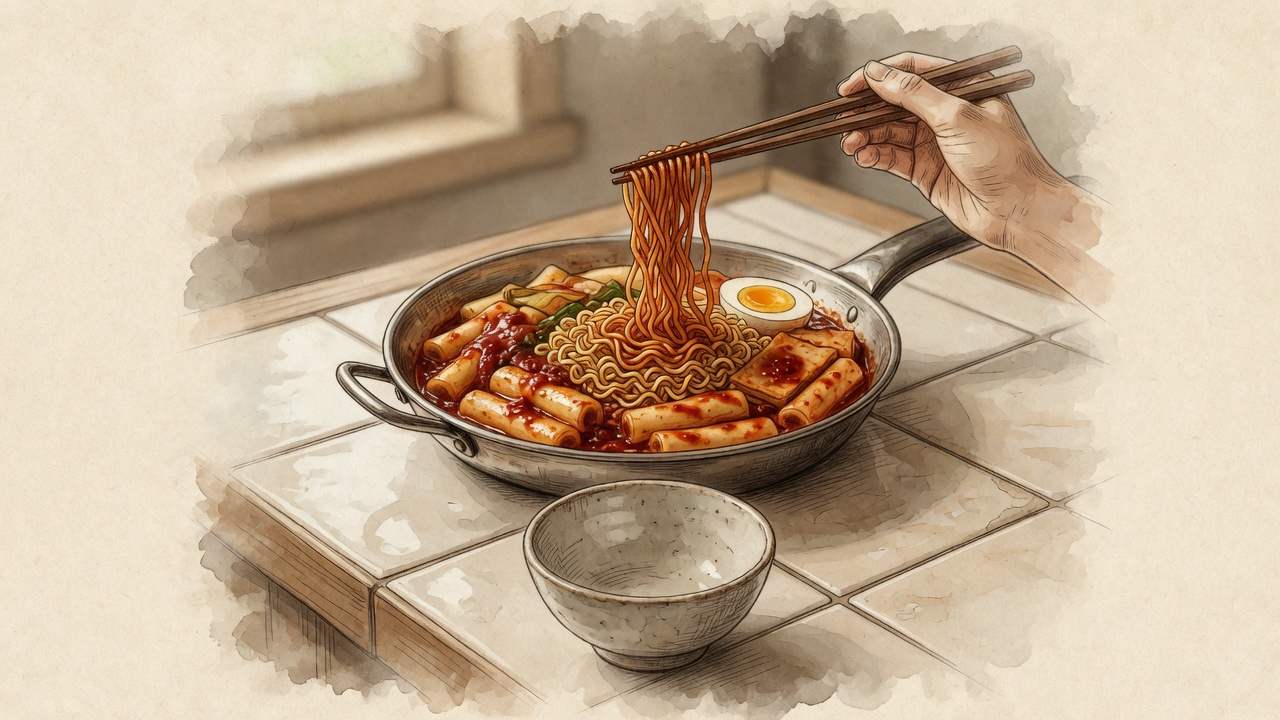
Dissolve the gochujang and gochugaru seasoning in water and simmer the rice cakes, fish cakes, and cabbage first, then add the ramyeon noodles while there is still plenty of broth and cook 3 minutes more. The noodles keep drinking up the broth, so eat it as soon as the heat is off.
한국어로 보기 (Korean version)
Steps
- 1
Lower the eggs into boiling water and cook over medium heat for 10 minutes, then cool them in cold water and peel.
- 2
Soak the rice cakes in cold water for 10 minutes to soften. Meanwhile, cut the fish cakes into triangles and the cabbage into bite-size pieces, and slice the leek on the diagonal.
If the rice cakes are fresh and soft, skip the soak and just rinse them once.
- 3
Pour 500 ml water into a wide pot and stir in the gochujang, gochugaru, soy sauce, sugar, syrup, and minced garlic, then bring to a boil. Add the rice cakes, fish cakes, and cabbage and simmer over medium heat for 5 minutes.
Stir for the first minute or two so the rice cakes don't stick to the bottom.
- 4
Add the noodles and cook for 3 minutes, loosening them with chopsticks, then add the boiled eggs and leek, cook 1 minute more, and turn off the heat.
Lifting the noodles into the air a few times with chopsticks keeps them springy and less soft.
Substitutions
| Instead of | Use | How |
|---|---|---|
| ramyeon noodles | 1 serving of jjolmyeon noodles or udon noodles | Separate jjolmyeon strands and add them for the last 2 minutes; give udon just the last minute. |
| water | 500 ml anchovy broth | The broth is richer, so use a little less soy sauce. |
Storing leftovers
The noodles soak up all the broth and swell, and the rice cakes harden in the fridge. Refrigerate leftovers and eat within 1 day; add 3 to 4 Tbsp water and simmer again until the rice cakes are soft and hot in the center. Swollen noodles can't be rescued, so cook only as much as you will eat, and do not freeze it, since the rice cakes crack and the noodles fall apart.
Serve with
Yellow pickled radish (danmuji), kimbap, or fried snacks (twigim). The broth is spicy and sweet, so mild kimbap or cool pickled radish pairs well.
Making more or less
With 2 blocks of noodles, add 150 ml more water and 1½ times the seasoning, and use a wide pot so the noodles don't clump.
Questions
How much water should rabokki have?
Right before the noodles go in, the broth should sit about 1 cm above the rice cakes. One block of noodles absorbs roughly 100 to 150 ml, so if the broth looks low, add water before the noodles and taste for seasoning again.
Can I use the ramyeon seasoning packet?
Adding a third of the packet gives extra savoriness. Leave out the soy sauce and cut the gochujang to 1 Tbsp so it doesn't get too salty.
More with the same ingredients