Noodles
Bibim Guksu (Spicy Mixed Noodles)
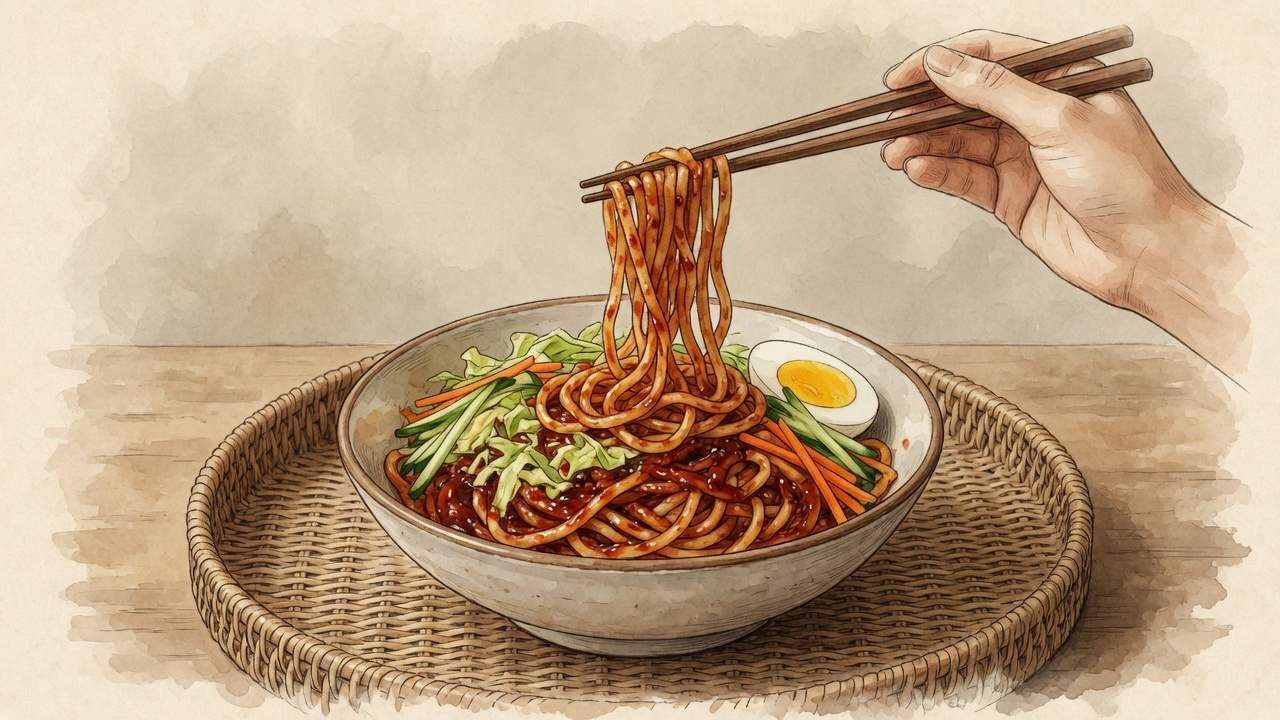
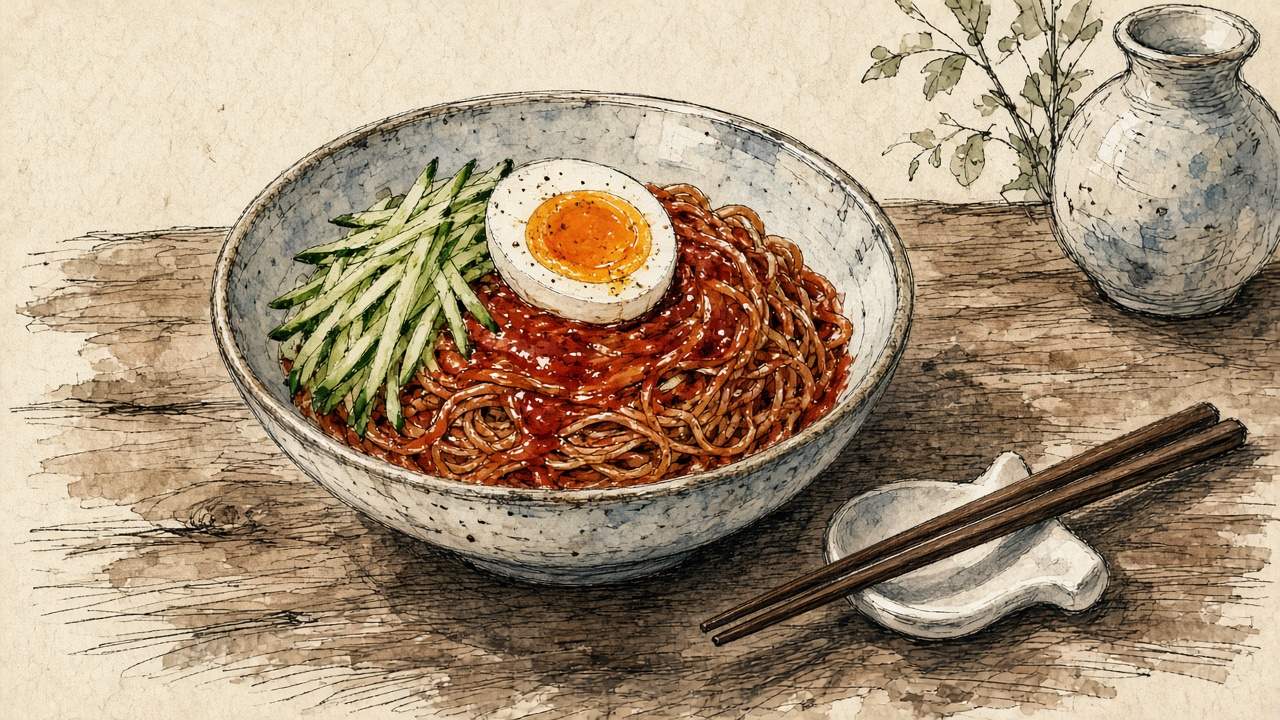
Boil thin somyeon noodles, rub them under cold water to wash off the starch, then toss with a gochujang sauce and top with cucumber and egg. Taste the sauce right before adding the noodles.
한국어로 보기 (Korean version)
Steps
- 1
Put the egg in cold water and, once it comes to a boil, cook for 10 minutes. Cool it in cold water and cut it in half. Meanwhile, julienne the cucumber, salt it with a pinch of salt for 5 minutes, and squeeze out the water.
- 2
In a bowl, mix the gochujang, gochugaru, sugar, vinegar, soy sauce, sesame oil, and minced garlic to make the sauce.
- 3
Boil the noodles for 4 minutes, then rub them under cold water to wash off the starch and squeeze them well to drain.
Noodles that sit too long stick together, so add them to the sauce right away.
- 4
Add the sauce to the noodles, toss evenly, and top with the cucumber, egg, and sesame seeds to serve.
Substitutions
| Instead of | Use | How |
|---|---|---|
| gochujang | 2 Tbsp cho-gochujang (vinegared gochujang) | If using cho-gochujang, cut the vinegar and sugar in half. |
| cucumber | shredded lettuce | Add the lettuce just before eating. |
Storing leftovers
Once mixed, the noodles soak up the sauce and swell, so it's best not to have leftovers. If you need to keep some, store the sauce and noodles separately in the fridge and eat cold within 1 day; rinse stuck-together noodles once in cold water to loosen them before tossing. Don't freeze the noodles or the sauce.
Serve with
Gim (roasted seaweed), gyeran-mari (rolled omelet), doenjang-guk (soybean paste soup). A good fit for a midday meal in summer.
Making more or less
Adjust the heat with the gochugaru.
Questions
How do I keep bibim guksu noodles from sticking?
Noodles stick because of starch left on the surface. Right after boiling, rub and rinse them by hand in cold water, changing the water two or three times, then squeeze them dry and toss with the sauce right away. If you have to cook them ahead, toss them with a little sesame oil.
How do I adjust the heat and sweetness of bibim guksu?
Gochujang varies in heat and sweetness, so taste the sauce after mixing and before adding the noodles. If it's too spicy, add a little more sugar and sesame oil; if it tastes flat, add vinegar 1 tsp at a time. To add heat only, use more gochugaru.
More with the same ingredients