Soups & Stews
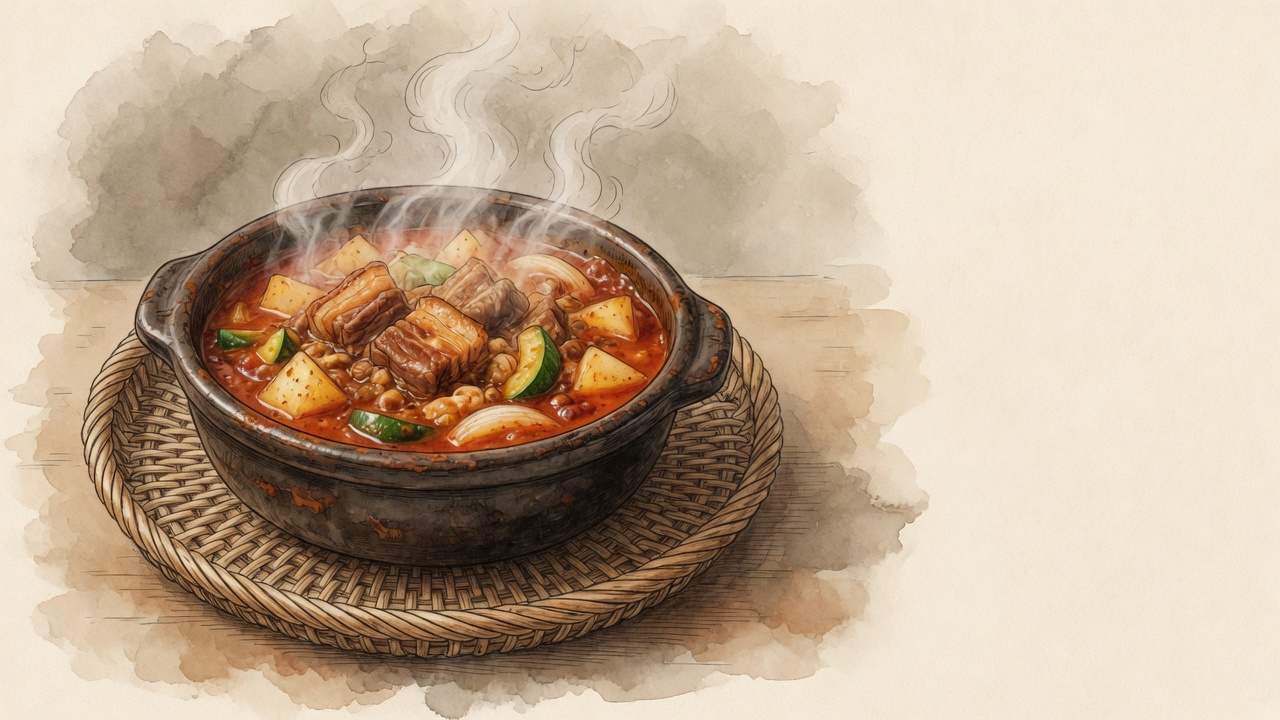
Gamjatang (Pork Bone Soup)
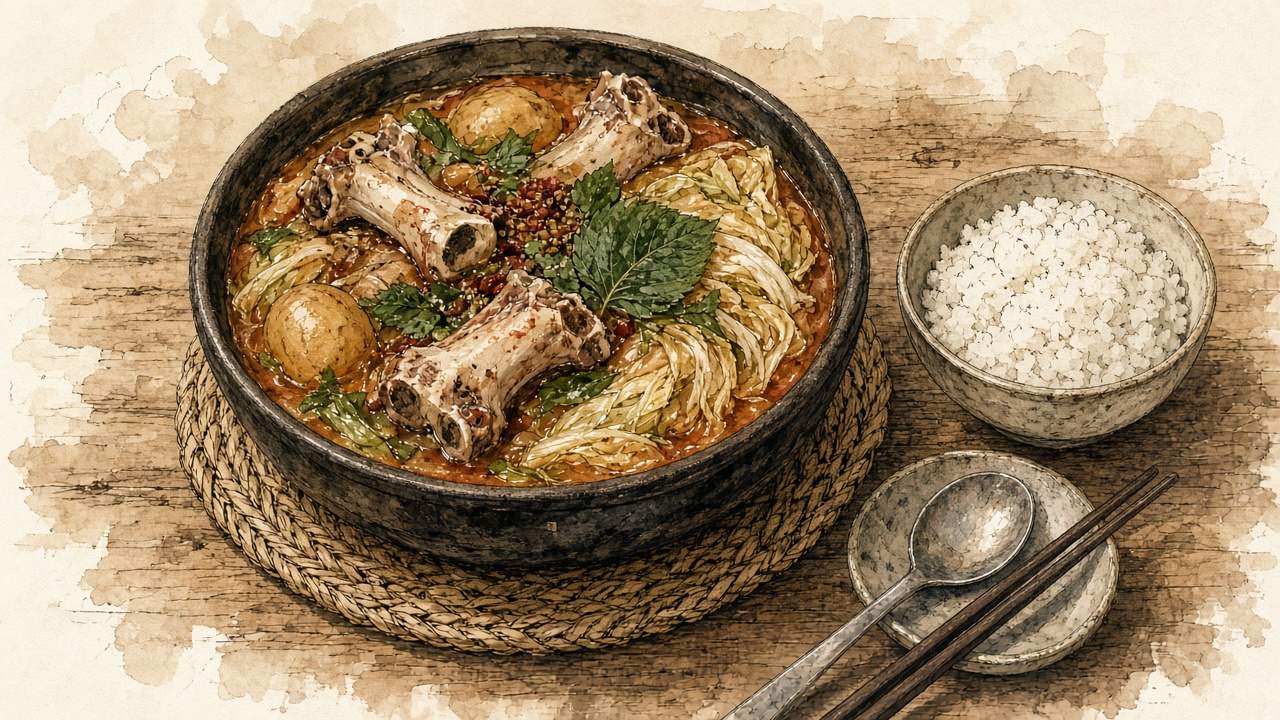
Soak the pork bones to draw out the blood and simmer them first to build the broth, then add the potatoes and gochugaru seasoning and simmer well. Cook until the meat on the bones is tender and a fork pierces the potatoes.
한국어로 보기 (Korean version)
Steps
- 1
Soak the pork bones in cold water for 30 minutes to draw out the blood. Cut the potatoes into large pieces and roughly chop the onion, leek, and chilies.
Cut out any sprouts and green parts from the potatoes. Changing the soaking water once halfway reduces the porky smell.
- 2
Put the bones and water in a pot, bring to a boil, and blanch for 5 minutes. Discard the water with the scum and rinse just the bones.
- 3
Add 2 L fresh water, the bones, ginger, and doenjang, and simmer over medium heat for 40 minutes, until the meat starts to pull away from the bone.
- 4
Add the potatoes, onion, gochugaru, minced garlic, and guk-ganjang, and simmer 20 minutes more, until a fork pierces the potatoes.
- 5
Add the leek, chilies, and perilla seed powder, simmer 5 minutes more, and serve.
Substitutions
| Instead of | Use | How |
|---|---|---|
| pork back bones | 1 kg pork neck bones | Soak neck bones to remove the blood too, and simmer for the same time. |
| perilla seed powder | leave out | It's fine without; adding it makes the broth nutty and a little thicker. |
Storing leftovers
As it cools, fat sets on top of the broth and the potatoes soak up liquid and go soft. Skim off the solid fat, store airtight in the fridge, and eat within 2 days; when reheating, add a little water and bring to a rolling boil so the meat on the bones is hot through. To keep it longer, remove the potatoes and freeze just the bones and broth in single portions; use within 2 weeks.
Serve with
Rice, yeolmu kimchi (young radish kimchi), and pa-kimchi (green onion kimchi). The broth is rich, so a tangy kimchi goes well.
Making more or less
For 4 servings, increase the bones to 1.3 kg and use a deep pot, starting with just enough water to cover the bones.
Before you cook
- Simmer the pork until fully cooked with no pink inside.
- Cut out potato sprouts and any green parts.
Questions
How do I reduce the porky smell in gamjatang?
The smell comes from blood left in the bones and the impurities that float up in the first water. After blanching, rinse off any blood clots between the bones by hand under running water, and leave the lid slightly ajar while simmering so the smell doesn't get trapped. Doenjang and ginger cover any remaining smell.
More with the same ingredients