Stir-fries
Aehobak Bokkeum (Stir-fried Korean Zucchini)
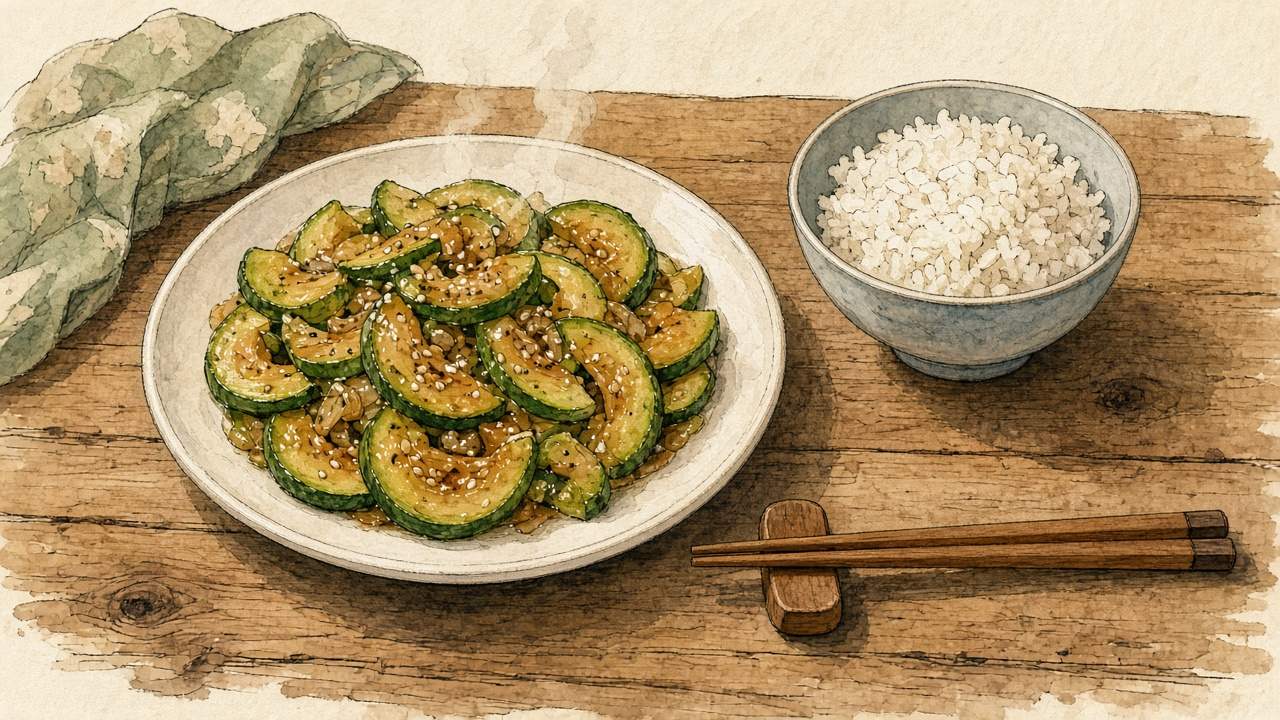
Salting the zucchini for 5 minutes keeps the pan from filling with water as it cooks. Stir-fry the onion and Korean leek over medium heat first to bring out their sweetness, then add the zucchini and cook only until it just softens.
한국어로 보기 (Korean version)
Steps
- 1
Cut the zucchini into half-moons, sprinkle with a little salt, and let sit for 5 minutes, then gently squeeze out the water in a piece of cheesecloth.
Squeezing hard ruins the texture, so just remove the surface moisture.
- 2
Cut the onion and leek to about the same size as the zucchini.
- 3
Heat the oil in a pan over medium heat and stir-fry the onion and the white part of the leek for 2 minutes.
- 4
Add the zucchini and minced garlic and stir-fry over medium heat for 4 minutes, until the edges turn translucent, then finish with the guk-ganjang and sesame oil.
Cooking any longer draws water out again and makes it soggy. Add salt only after tasting with the guk-ganjang in.
Substitutions
| Instead of | Use | How |
|---|---|---|
| guk-ganjang | a pinch of salt | The color will be lighter, so make up the aroma with sesame oil. |
| Korean zucchini (aehobak) | 1 regular zucchini | Zucchini holds more water, so salt it 2 minutes longer. |
Storing leftovers
The zucchini releases a little more water and softens as it cools. Store airtight in the fridge and eat within 2 days; stir-frying again makes it softer, so to reheat, just warm it in a pan for 30 seconds or eat it cold. Freezing ruins the texture, so don't freeze.
Serve with
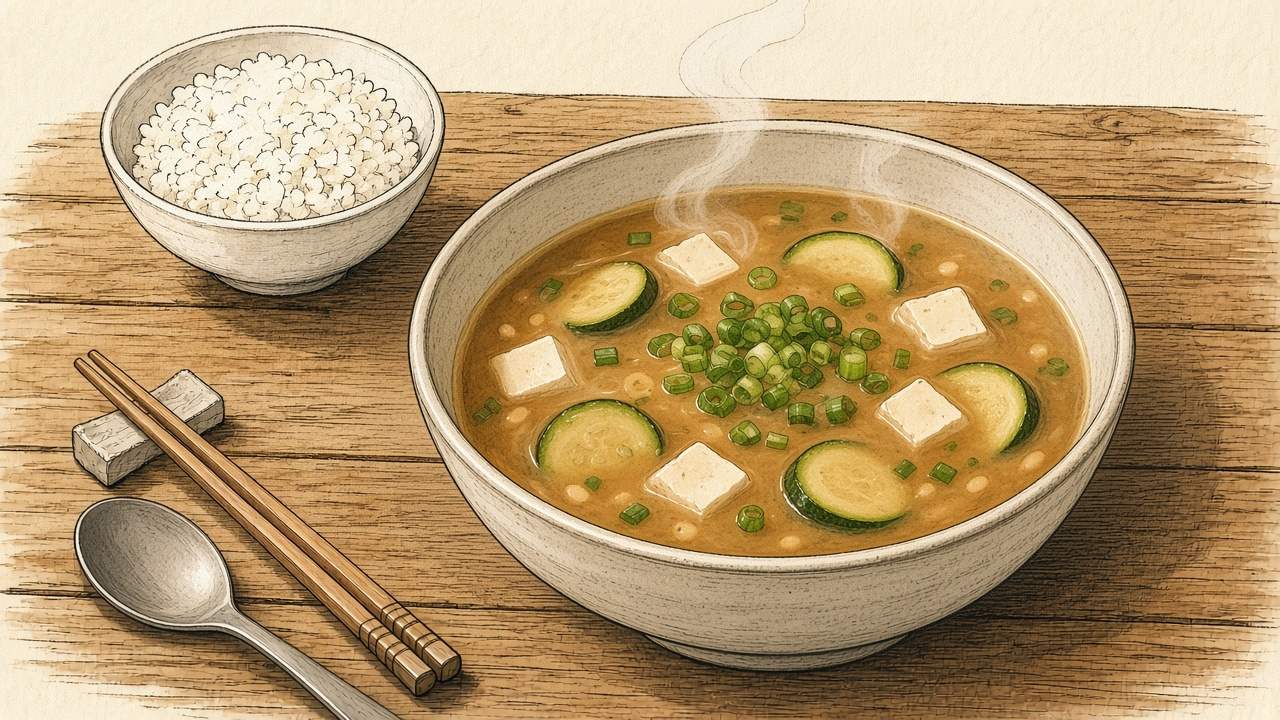
Rice, doenjang-guk (soybean paste soup), and a fried egg. Season it lightly so it doesn't compete with the doenjang-guk.
Making more or less
If you put 2 zucchini in one pan, the water has nowhere to escape, so cook in batches and season each with the guk-ganjang separately.
Questions
How do I keep stir-fried zucchini from getting soggy?
Zucchini is full of water, so if you stir-fry it right away, water pools in the pan and it ends up tasting boiled. Salting the cut zucchini draws the surface water out first so less comes out in the pan, and if your pan is small, cook in batches so the water can evaporate. Adding the soy sauce at the end also keeps it from releasing water.
More with the same ingredients