Noodles
Jjajangmyeon (Black Bean Noodles)
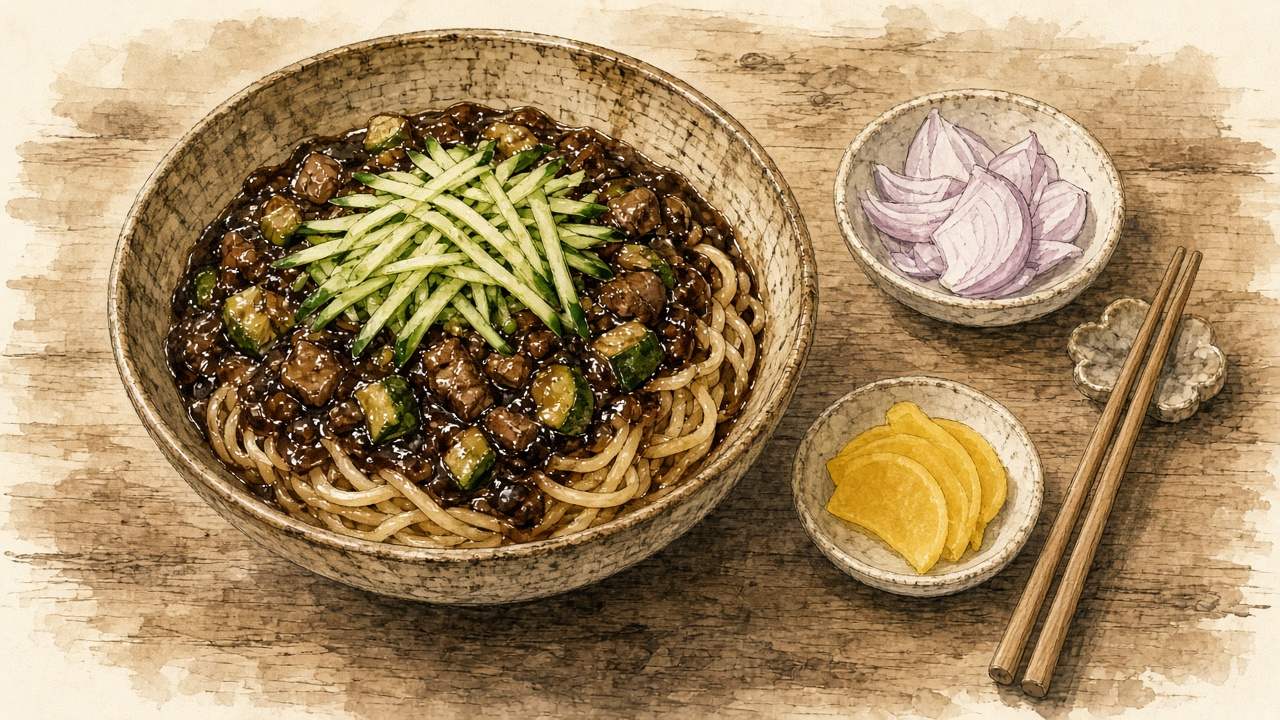
Fry the chunjang (black bean paste) well in oil to cook off its bitterness, then add pork and vegetables, pour in water, and simmer. Boil fresh jjajang noodles separately, put them in bowls, and spoon the sauce over the top.
한국어로 보기 (Korean version)
Steps
- 1
Cut the pork into bite-size pieces, cut the onion, potato, and carrot to a similar size, and julienne the cucumber.
If the potato is cut too small, it falls apart in the sauce.
- 2
Heat 2 Tbsp cooking oil in a pot over medium heat and stir-fry the chunjang for 3 minutes, working it into the oil until fragrant.
- 3
Add the pork and stir-fry for 4 minutes until fully cooked, with no pink inside.
- 4
Add the remaining 1 Tbsp oil and stir-fry the onion, potato, and carrot for 3 minutes, then pour in the water, add the sugar, and simmer over medium heat for 10 minutes.
- 5
Stir the starch into 2 Tbsp water, add it, and boil 2 minutes more to thicken. Boil the noodles in a pot of boiling water, drain, and put them in bowls, then top with the sauce and the cucumber.
Cook the noodles 30 seconds less than the package says before mixing with the sauce.
Substitutions
| Instead of | Use | How |
|---|---|---|
| pork shoulder | 150 g ground pork | Stir-fry ground pork for 3 minutes, breaking it up so it doesn't clump. |
| chunjang | 120 g store-bought jjajang sauce | It's already sweetened, so cut the sugar in half. |
Storing leftovers
Because of the starch, jjajang sauce thickens and sets as it cools. Store in an airtight container in the refrigerator and eat within 2 days; to reheat, add 2–3 Tbsp water and bring to a boil over medium heat, stirring. The sauce can be frozen in single-meal portions and used within 2 weeks, though the potato turns a little mealy. Noodles mixed with the sauce get soggy, so don't keep leftovers.
Serve with
Danmuji (yellow pickled radish), raw onion, and a fried egg. Tangy sides suit it better than soups.
Making more or less
For 4 servings, use a bigger pot, double the chunjang, water, and vegetables, and boil the noodles in batches.
Questions
How do I get rid of the bitterness in chunjang?
Chunjang tastes bitter and harsh if it isn't fried. Fry the chunjang alone in oil over medium heat for 3 minutes until it's evenly mixed with the oil and smells toasty. Over high heat it burns quickly and actually turns bitter, so keep stirring.
More with the same ingredients