Soups & Stews
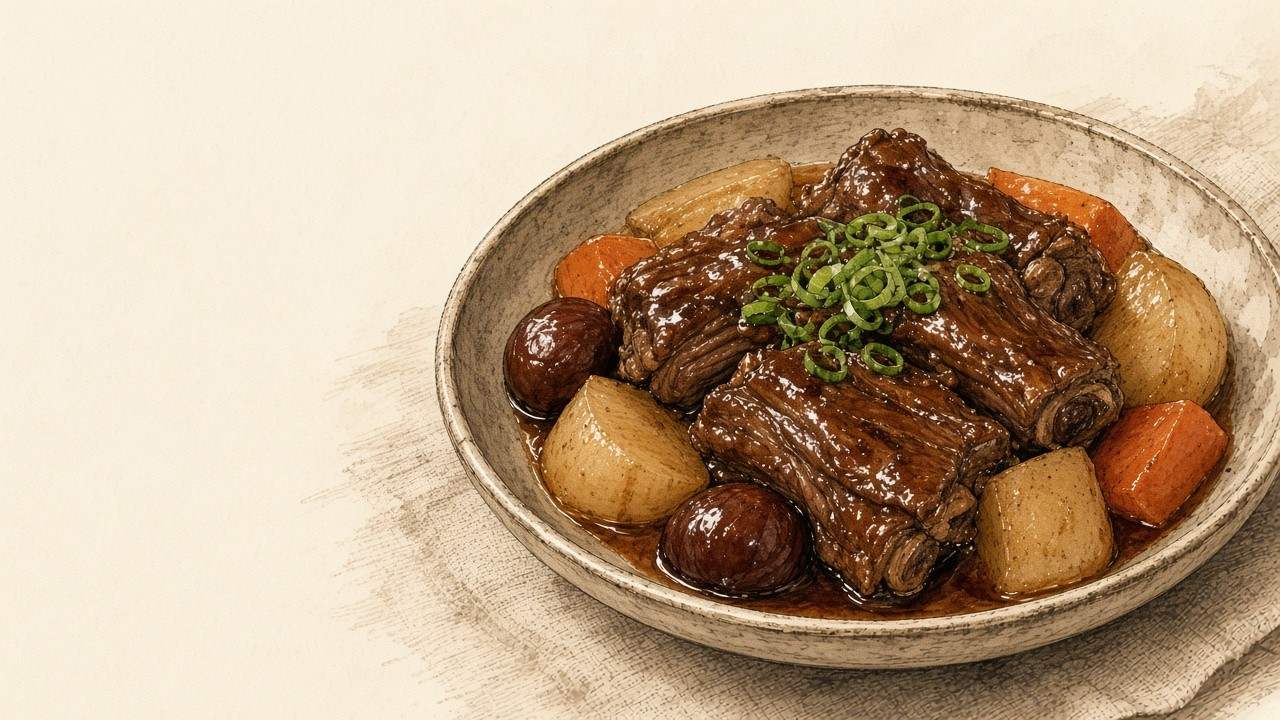
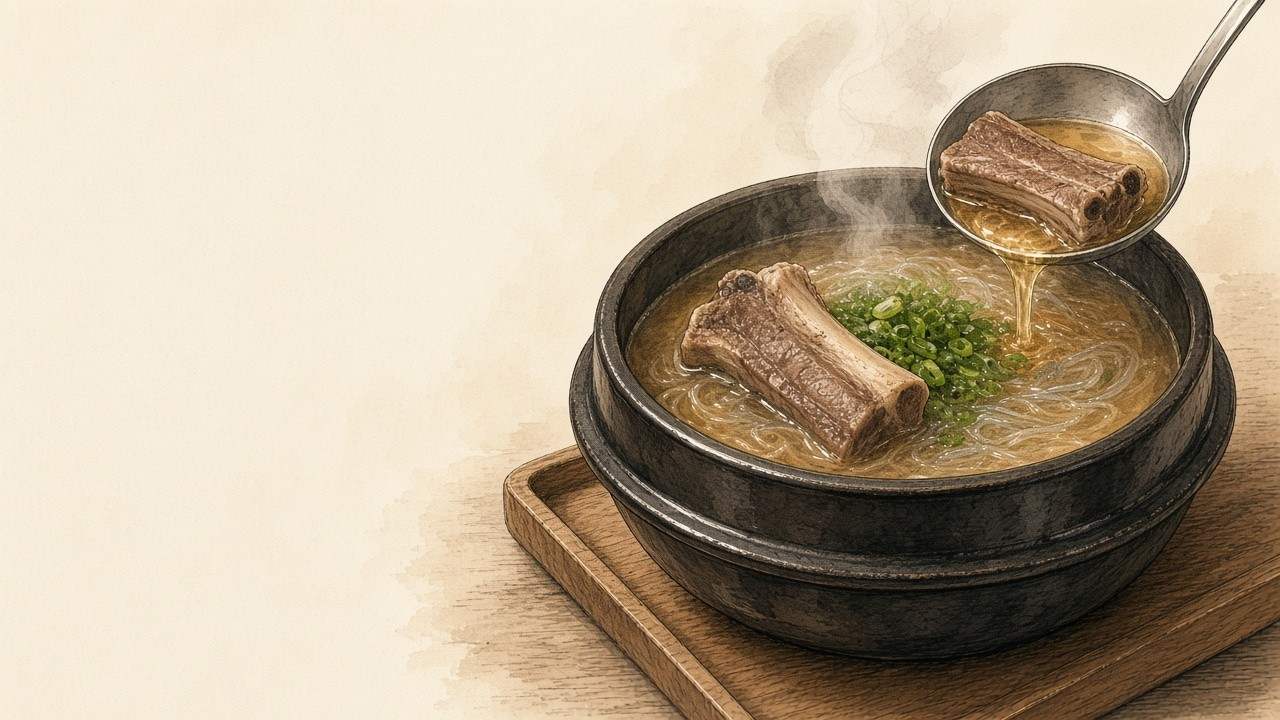
Galbitang (Short Rib Soup)
Soak the short ribs to draw out the blood, blanch them once and discard the water, then simmer them in fresh water for an hour with radish, onion, and leek. Skimming the fat and foam often keeps the broth clear; season with guk-ganjang and salt at the end.
한국어로 보기 (Korean version)
Steps
- 1
Soak the short ribs in cold water for 1 hour to draw out the blood, changing the water two or three times. Soak the glass noodles in lukewarm water for 30 minutes.
Trimming the thick fat off the ribs beforehand makes the broth less greasy.
- 2
Blanch the ribs in boiling water for 5 minutes, discard the water with the scum, and rinse the ribs in cold water, getting between the bones.
- 3
In 2.4 L fresh water, combine the ribs, the whole piece of radish, onion, 1 leek, and the garlic. Bring to a boil, then reduce to medium-low and simmer for 60 minutes, skimming the fat and foam often.
Leaving the lid slightly ajar keeps the broth clearer.
- 4
Lift out the radish, slice it into flat pieces, and return it to the pot; remove and discard the onion, leek, and garlic. Season with guk-ganjang and salt and simmer 5 minutes more.
- 5
Add the soaked noodles and simmer for 3 minutes. Top with the remaining leek, thinly sliced, sprinkle with pepper, and serve.
Substitutions
| Instead of | Use | How |
|---|---|---|
| glass noodles | leave out, or rice | If you skip the noodles, skip the final 3 minutes; you can also add rice to the soup. |
| guk-ganjang | salt only | For an even clearer broth, season with salt alone and no guk-ganjang. |
Storing leftovers
As it cools, the fat sets white on top; skim it off for a clearer broth. Store airtight in the fridge and eat within 3 days, and when reheating bring the broth to a rolling boil and heat the meat through. Freeze broth and meat in single portions and use within 2 weeks; glass noodles swell, so add only as much as you'll eat.
Serve with
Rice, kkakdugi (cubed radish kimchi), and napa cabbage kimchi. The broth is clear and mild, so tangy, well-fermented kkakdugi goes well.
Making more or less
For 4–5 servings, increase the ribs to 1.5 kg and the water to 3.2 L, keeping the simmering time the same.
Before you cook
- Cook the beef thoroughly with the broth at a rolling boil.
Questions
How do I keep galbitang broth clear?
A hard boil over high heat emulsifies the fat into the broth and turns it cloudy. If it's already cloudy, let the broth cool, skim off the fat that sets on top, and reheat gently over medium-low heat — it will be much clearer. Discarding the first water when you blanch the ribs is for the same reason.
More with the same ingredients