Braised Dishes
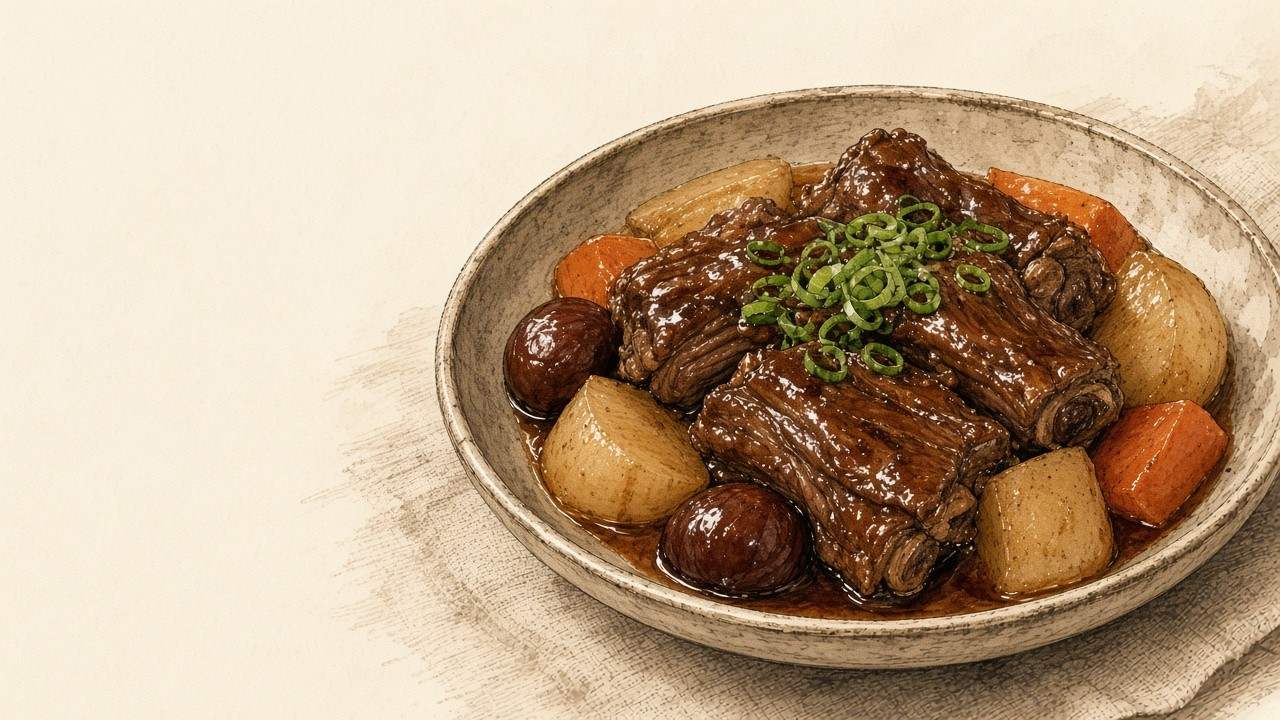
Galbi-jjim (Braised Short Ribs)
Soak the short ribs to draw out the blood, blanch them once, then braise them covered over medium-low heat in a soy sauce and Asian pear sauce. Add the radish and carrots only after the meat has softened so they don't fall apart, and uncover at the end to reduce the sauce until it just coats.
한국어로 보기 (Korean version)
Steps
- 1
Soak the short ribs in cold water for 1 hour to draw out the blood, changing the water two or three times. Trim off any thick chunks of fat with kitchen shears.
Draining the blood thoroughly keeps the sauce from turning cloudy and cuts down on gamey flavor.
- 2
Blanch the ribs in boiling water for 5 minutes, discard the water with the scum, and rinse the ribs in cold water, getting between the bones.
- 3
In a pot, mix the soy sauce, sugar, grated pear, minced garlic, mirim, pepper, and 800 ml water. Add the ribs, cover, and braise over medium-low heat for 40 minutes.
Rushing it over high heat makes the outside salty and the meat tough.
- 4
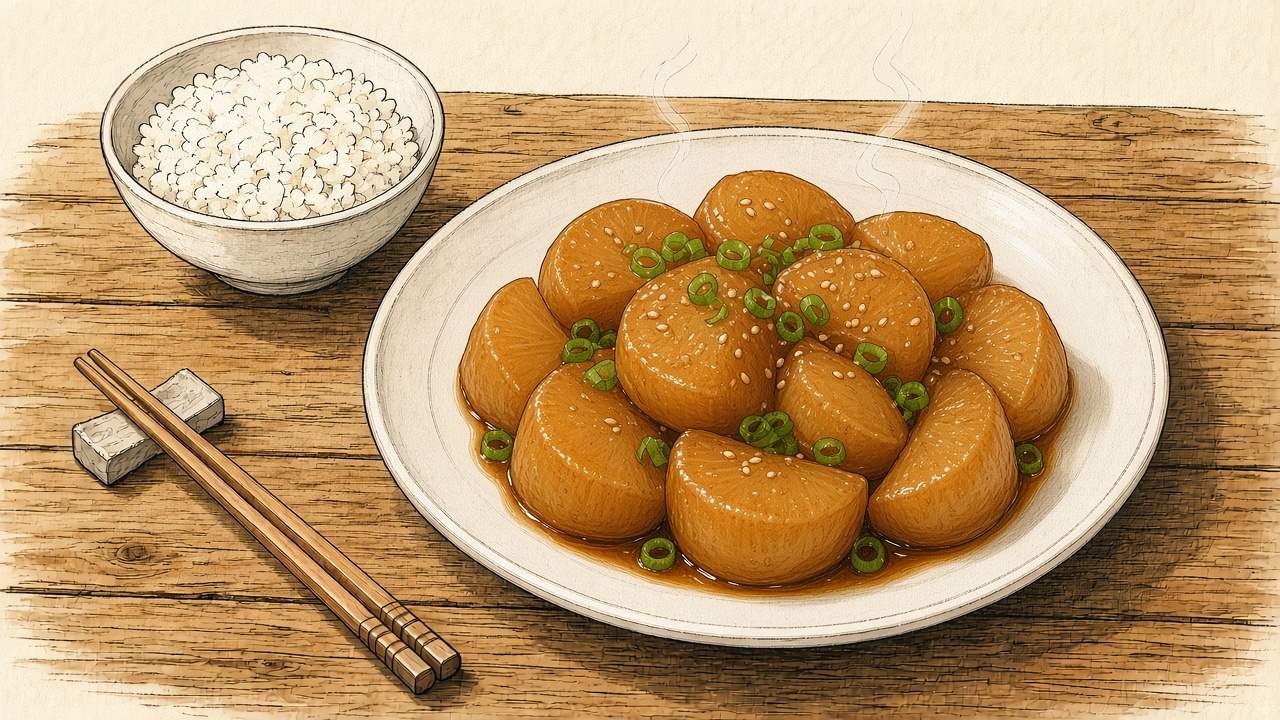
Add the radish and carrot, cut into large chunks, and the chestnuts. Braise 20 minutes more, until a chopstick slides easily into the radish.
Rounding off the corners of the radish and carrot helps them hold together through the long braise.
- 5
Add the onion and leek and simmer uncovered for 10 minutes. When the sauce has reduced to a thin layer, spoon it over the meat, drizzle with sesame oil, and serve.
Substitutions
| Instead of | Use | How |
|---|---|---|
| Asian pear | 1/4 apple or 1 Tbsp sugar | Without pear, grate in apple or just add a bit more sugar. Taste and adjust the sweetness at the end. |
| beef short ribs | 1 kg pork spareribs | Braise in the same order, and make sure the pork is cooked through with no pink inside. |
| chestnuts | leave out, or 3 shiitake mushrooms | You can skip the chestnuts; if using shiitake, add them at the same time as the radish. |
Storing leftovers
As it cools, white fat sets on top — skim it off, then store airtight in the fridge and eat within 3 days. If the sauce reduces and turns salty when reheating, add a little water, and heat until the meat is hot all the way through. Freeze the meat alone in single portions and use within 2 weeks; radish turns spongy when frozen, so eat it first.
Serve with
Rice, geotjeori (fresh kimchi), and dongchimi (radish water kimchi). The sauce is sweet and salty, so a crisp, refreshing kimchi goes well.
Making more or less
For 4–5 servings, increase the ribs to 1.5 kg and the sauce to 1½ times, and braise in a wide pot so the ribs don't overlap.
Before you cook
- Braise the beef long enough at a full simmer that it cooks through.
Questions
Why is my galbi-jjim meat tough?
A short braise over high heat makes the outer meat contract first and turn tough. If it's already tough, add 200 ml more water, cover, and braise over medium-low heat for another 20–30 minutes. It's done when a chopstick slips easily into the meat next to the bone.
More with the same ingredients