Stir-fries
Tteokbokki (Spicy Rice Cakes)
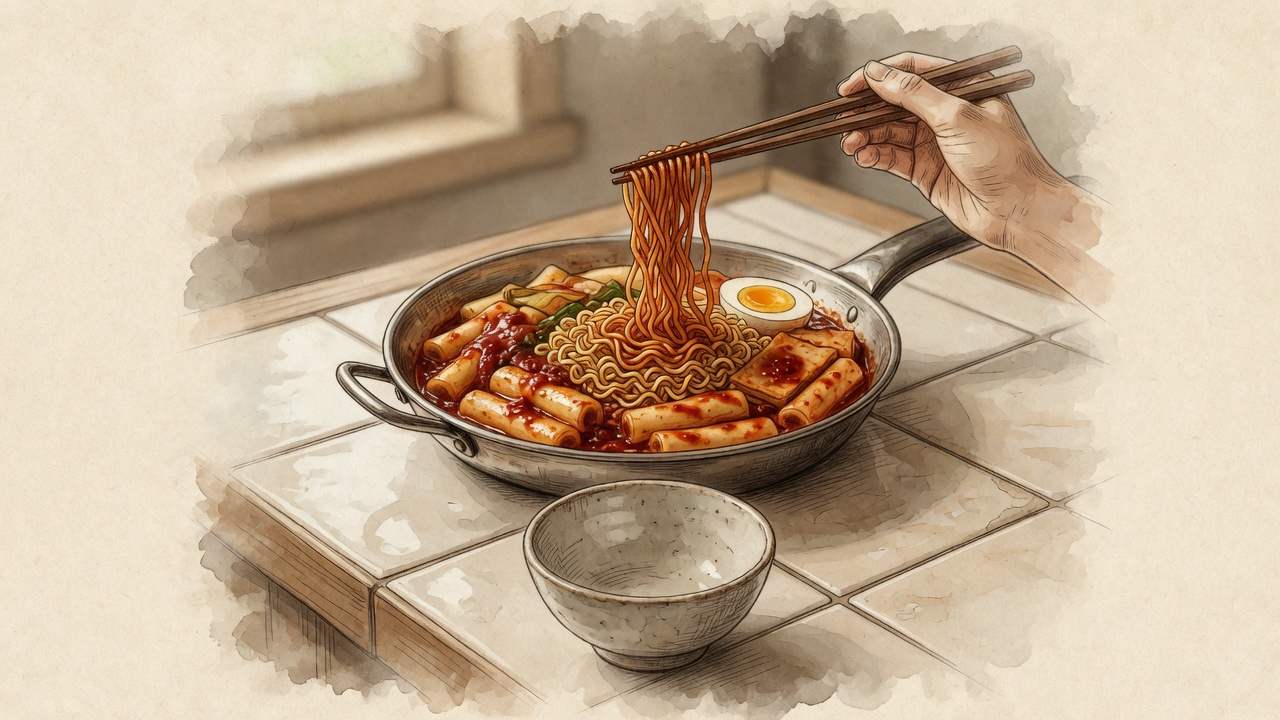
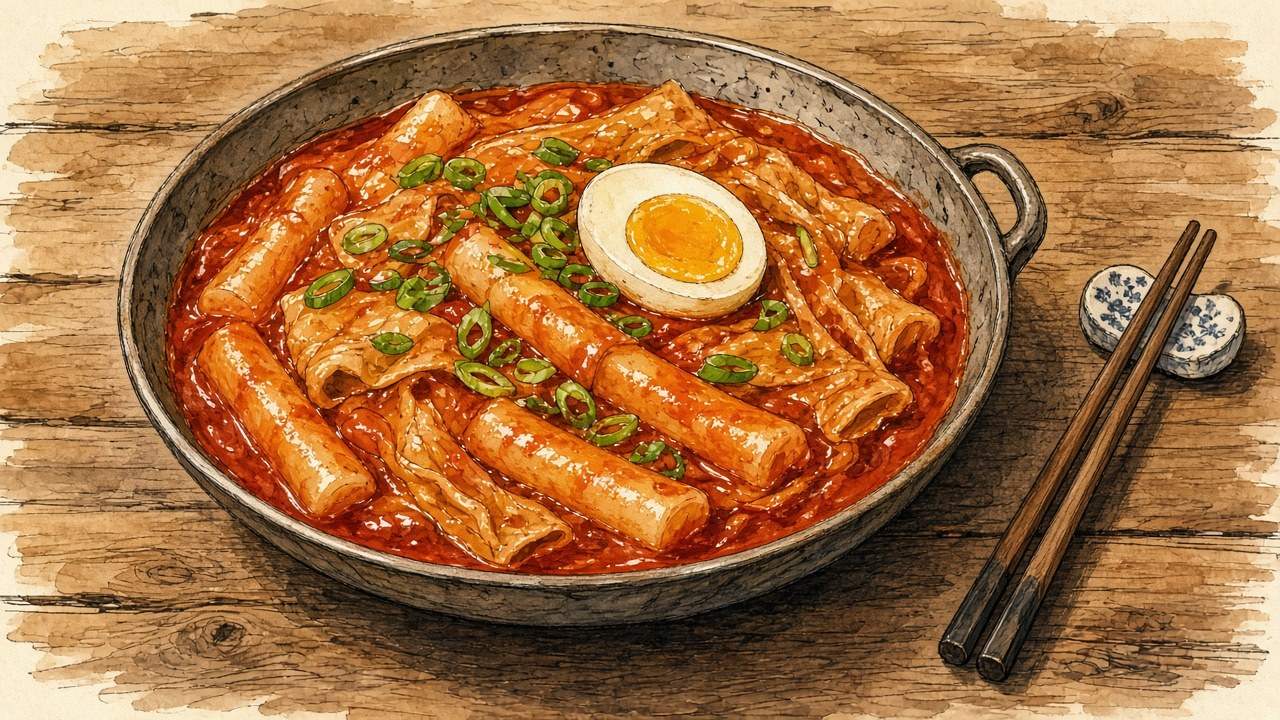
Dissolve the seasonings in water and bring to a boil before adding the rice cakes so the outsides don't scorch and the centers turn soft. Add fish cakes, Korean leek, and boiled eggs and simmer until the sauce thickens.
한국어로 보기 (Korean version)
Steps
- 1
Put the eggs in cold water and bring to a boil over medium heat. Once the water starts boiling, cook for 12 minutes until the yolks are fully set, then cool in cold water and peel.
- 2
Soak the rice cakes in cold water for 10 minutes and separate them. Cut the fish cakes into triangles, the leek into 5 cm lengths, and the cabbage into bite-size pieces.
Rice cakes that have hardened in the fridge soften quickly if you blanch them in boiling water for 1 minute.
- 3
In a wide pan, stir the water, gochujang, gochugaru, soy sauce, sugar, and garlic together well and heat over medium heat until it comes to a boil.
Dissolve all the gochujang lumps before it boils.
- 4
Add the rice cakes and cabbage and boil over medium heat for 5 minutes, stirring, until the rice cakes are soft. Then add the fish cakes, leek, and boiled eggs.
The rice cakes stick to the bottom easily, so scrape it often with a spatula.
- 5
Simmer 3 more minutes until the sauce thickens, then add the oligosaccharide syrup, stir once, and turn off the heat.
If the sauce reduces too much, add water 2 to 3 Tbsp at a time.
Substitutions
| Instead of | Use | How |
|---|---|---|
| 2 Tbsp gochujang | 1 Tbsp gochujang plus 1 Tbsp extra gochugaru | Less gochujang makes the sauce less sweet, with a cleaner heat. |
| water | 400 ml anchovy and kelp broth | Broth adds deeper savory flavor, so you can cut back slightly on the sugar. |
Storing leftovers
As they cool, the rice cakes soak up the sauce and harden, so it's best eaten right away. If there are leftovers, cool them, refrigerate, and eat within 1 day; reheat with 2 Tbsp of water over medium heat until the rice cakes are soft again and hot all the way through. Once rice cakes, fish cakes, and eggs are combined, the texture falls apart when frozen, so don't freeze it.
Serve with
Kimbap, twigim (Korean fritters), and sundae (Korean blood sausage). At home, gimmari (fried seaweed rolls) or pan-fried dumplings are good alongside.
Making more or less
If you add more rice cakes, increase the water and seasonings in the same proportion. If you add ramyeon noodles, add 200 ml more water.
Questions
How do I get tteokbokki rice cakes soft?
Refrigerated rice cakes are hard in the center, so if you boil them straight away, the outside turns mushy while the inside stays hard. Soak them in cold water for 10 minutes or blanch them in boiling water for 1 minute to soften them all the way through, and add them only once the sauce is boiling so the outside doesn't get mushy.
More with the same ingredients