Seasoned Salads
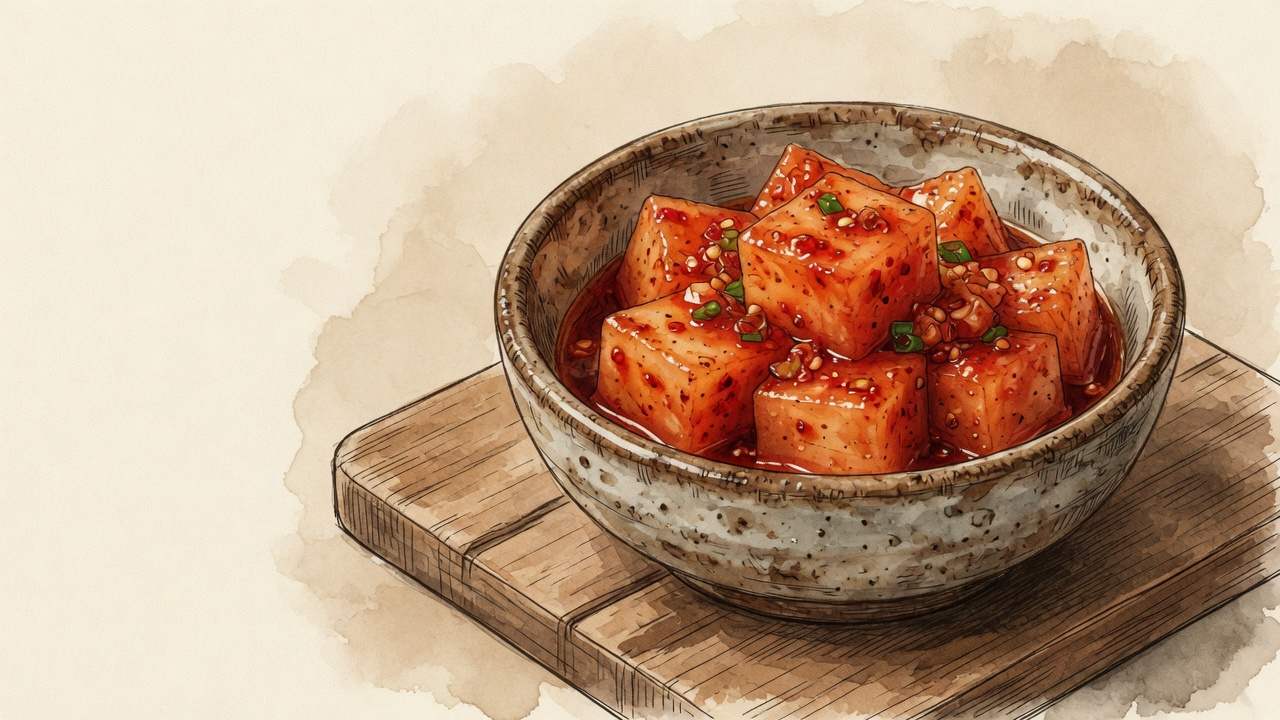
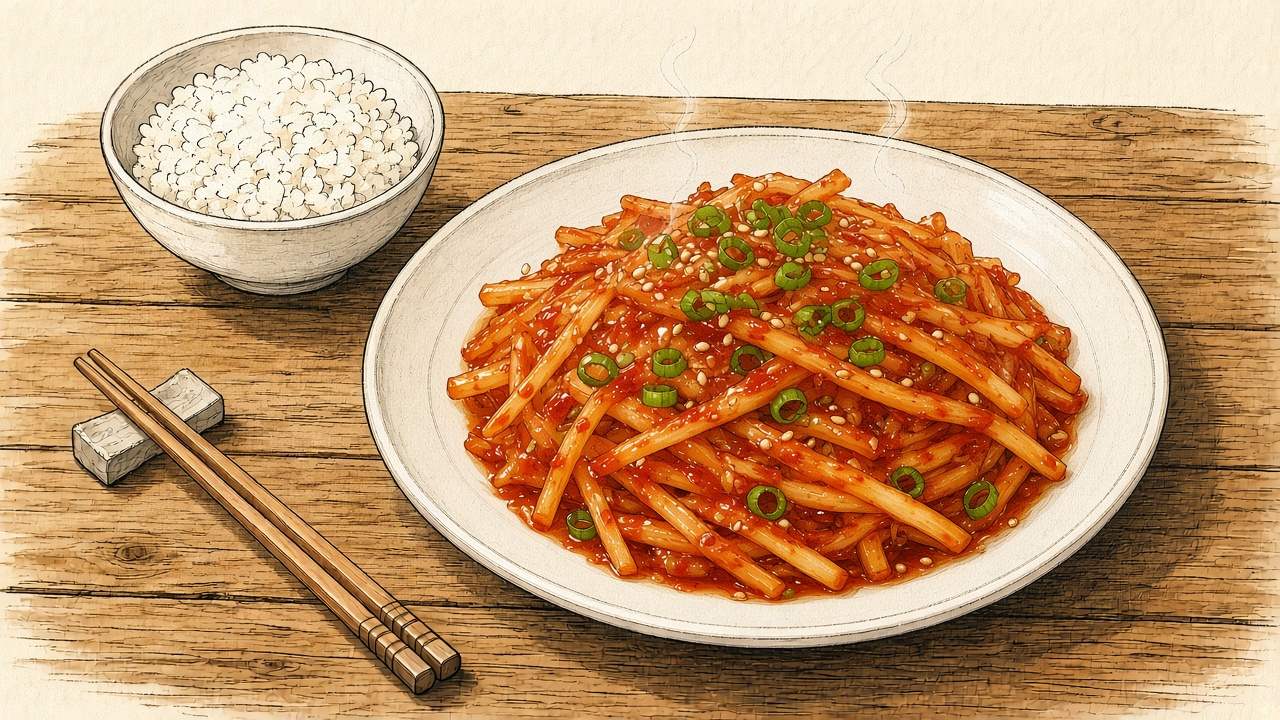
Mu-saengchae (Spicy Radish Salad)
Julienne the radish thin and even so it seasons evenly, and slice the green onions thinly to add a sharp bite. It releases water if it sits after mixing, so finish it just before eating.
한국어로 보기 (Korean version)
Steps
- 1
Peel only the tough parts of the radish skin, cut the radish into thin matchsticks, sprinkle with the 1/2 tsp salt, and let sit for 10 minutes.
If the thickness varies, only the thin strips wilt first. Cut them as evenly as you can.
- 2
Lightly squeeze out the water the radish released, and thinly slice the green onions.
Squeezing hard takes away the crunch, so press gently with your hands.
- 3
Mix the gochugaru, fish sauce, vinegar, sugar, and garlic first to make the seasoning, then add the radish and green onions and toss.
Sprinkling gochugaru straight onto the radish makes it clump, so dissolve it in the fish sauce first.
- 4
Top with sesame seeds and eat right away. To keep some for later, store the seasoning and radish separately and combine them just before eating.
Substitutions
| Instead of | Use | How |
|---|---|---|
| fish sauce | 1 tsp guk-ganjang (soup soy sauce) | If it lacks savory depth, add a little more minced garlic. |
| green onions | 1/4 Korean leek, green part | Korean leek is milder than green onions, so slice it a little finer. |
Storing leftovers
Once dressed, the salad lasts 1 day in the fridge at most. Eat it cold without heating; if a lot of liquid collects, pour it off and add a fresh sprinkle of sesame seeds. Don't leave it at room temperature, and don't freeze it, since it releases a lot of water.
Serve with
Grilled fish, doenjang jjigae, and rice. If the salad is sour, use a little less doenjang in the stew than usual.
Making more or less
Even when doubling the recipe, don't salt the radish for more than 10 minutes, so it doesn't wilt too much.
Before you cook
- The radish and green onions in this salad are eaten raw. Don't re-dress a salad that has sat at room temperature for a long time.
Questions
How do I keep radish salad from getting watery?
Radish releases water when it touches salt and sugar, and it keeps releasing water even after it's dressed. Salting it first to draw out water means less liquid later; dress only as much as you'll eat and eat it right away. Pour off any liquid that's already collected and add a little more gochugaru to bring back the color.
More with the same ingredients