Side Dishes
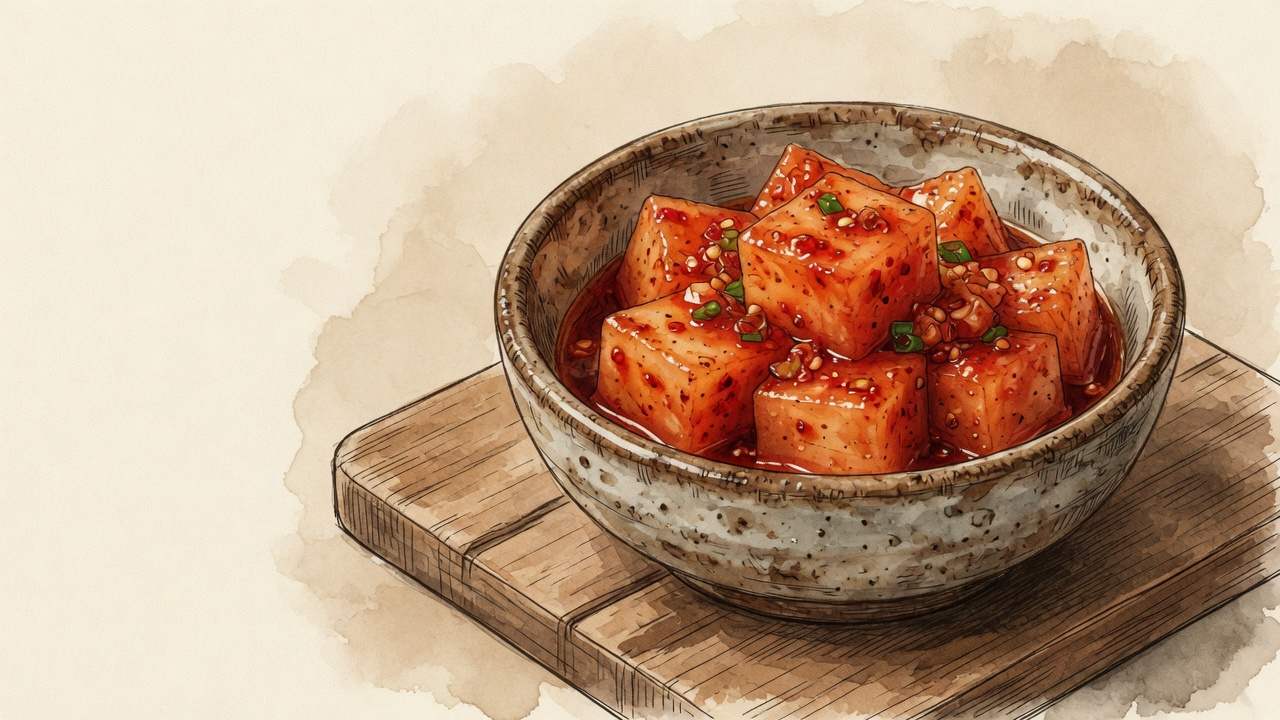
Kkakdugi (Cubed Radish Kimchi)
Cut the radish into 2 cm cubes and salt it with a little sugar for 40 minutes. Coat it with gochugaru first for color, then toss with fish sauce, salted shrimp, garlic, and a glutinous rice paste. Leave it at room temperature for a day, then refrigerate as it turns pleasantly sour.
한국어로 보기 (Korean version)
Steps
- 1
Scrub the radish with a brush and cut it into 2 cm cubes. Cut the scallions into 3 cm lengths.
Even cubes salt and ferment at the same pace. If the skin is thin, there is no need to peel it.
- 2
Toss the radish with the coarse salt and sugar and let it salt for 40 minutes, turning it top to bottom once halfway.
Bite a piece: when it is lightly seasoned and the corners are less stiff, it is ready.
- 3
Meanwhile, whisk 100 ml water and the glutinous rice flour in a small pot and cook over low heat, stirring, for 2 minutes until it thickens into a paste. Let it cool.
- 4
Without rinsing, drain the salted radish in a colander for 10 minutes.
- 5
Toss the radish with the gochugaru first until it turns red, then add the fish sauce, chopped salted shrimp, minced garlic, ginger, and cooled rice paste and mix well. Fold in the scallions last.
Coating with gochugaru first gives a deeper color and keeps the seasoning from sliding off.
- 6
Pack it firmly into an airtight container, leave it at room temperature for a day, then refrigerate. In hot weather, cut the room-temperature time to half a day.
Substitutions
| Instead of | Use | How |
|---|---|---|
| glutinous rice paste | 2 Tbsp cooked rice | Blend the rice with 100 ml water until smooth; no cooking needed. |
| salted shrimp | 1 Tbsp more fish sauce | Without saeujeot, use more fish sauce and adjust the salt to taste after mixing. |
| scallions | 1 Korean leek (daepa), white part only | Slice thinly on the diagonal. It is stronger than scallions, so use a little less. |
Storing leftovers
It keeps fermenting slowly in the fridge, getting more sour over time, and the radish releases liquid that builds up in the container. Eat it within 2 to 3 weeks of refrigerating for the best crunch. Kkakdugi that has gone very sour is good chopped and stir-fried again in fried rice or simmered in a stew. Serve it cold as a side without reheating, and do not freeze it, since the radish turns mushy.
Serve with
Galbitang (short rib soup), suyuk (boiled pork belly), or kalguksu. Its crunchy tang suits clear broths and rich meats.
Making more or less
For half a radish, halve all the seasonings but keep the 40-minute salting time.
Questions
Why does kkakdugi turn soft?
Either the radish was under-salted and kept too much water, or it sat at room temperature too long. Watery summer radishes soften especially easily, so salt them 10 minutes longer and ferment at room temperature for only half a day.
My kkakdugi tastes bitter. Why?
Often the radish itself is bitter, which is common from late spring through summer. Add 1 tsp more sugar and let it ferment for about two days, and most of the bitterness fades. Fall and winter radishes are naturally sweeter.
More with the same ingredients