Seasoned Salads
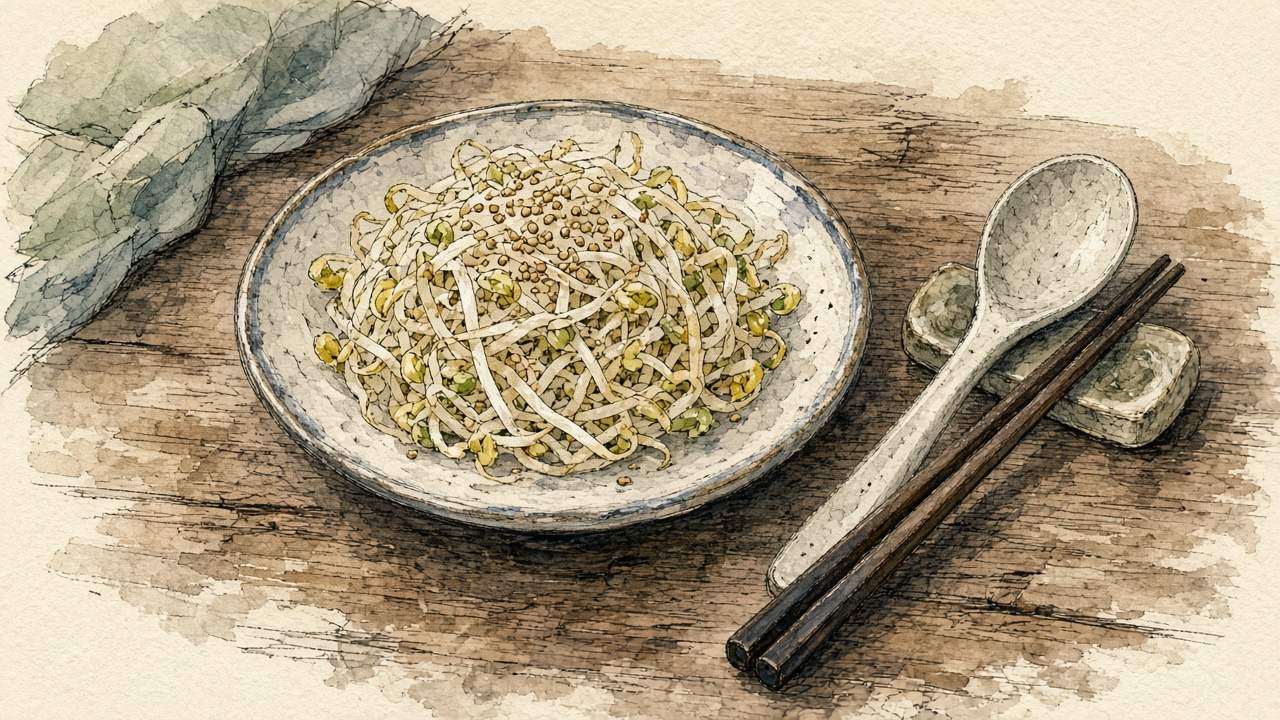
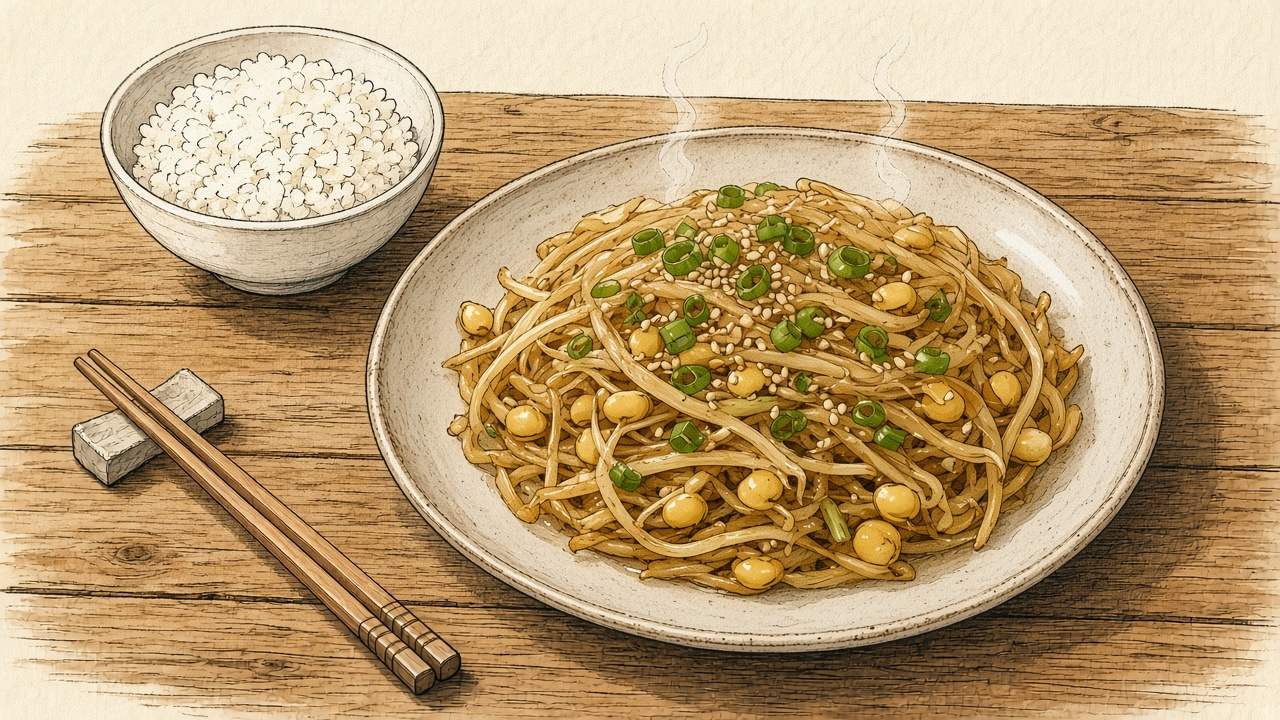
Kongnamul-muchim (Seasoned Soybean Sprouts)
Blanch the soybean sprouts in salted boiling water for at least 5 minutes until fully cooked, then rinse in cold water and season. Don't blanch the green onion; add it at the end to keep its fresh aroma.
한국어로 보기 (Korean version)
Steps
- 1
Rinse the bean sprouts and blanch them in boiling water with a little salt for at least 5 minutes. Cook thoroughly, until the stems are translucent and no longer tough.
If they're still stiff after 5 minutes, blanch 1–2 minutes more.
- 2
Rinse in cold water and gently squeeze out the water by hand. Squeezing hard presses out the juices and makes them taste bland.
- 3
Thinly slice the green onions and mix them with the soup soy sauce, minced garlic, and sesame oil first.
- 4
Toss the drained bean sprouts in the seasoning and top with sesame seeds.
Taste, and add salt only at the very end.
Substitutions
| Instead of | Use | How |
|---|---|---|
| guk-ganjang | salt and sesame oil | If it tastes less savory, add a little more minced garlic. |
| green onions | 2 stalks jjokpa (Korean scallions) | Jjokpa has a stronger aroma, so use less of it. |
Storing leftovers
Dressed bean sprouts release water and go limp over time. Store in an airtight container in the refrigerator and eat within 1 day, cold without heating; pour off any liquid that collects and add a little more sesame oil. Don't freeze dressed namul.
Serve with
Rice, doenjang-guk (soybean paste soup), and grilled fish. If the namul is salty, use less doenjang in the soup.
Making more or less
Even when making more, don't blanch for less than 5 minutes, and if your pot is small, blanch in two batches.
Before you cook
- Don't eat soybean sprouts raw. Season them only after blanching, once the stems are translucent.
Questions
What if my kongnamul-muchim tastes bland?
Squeezing the bean sprouts hard presses out their juices, and leftover water thins the seasoning, so it tastes bland. Press gently by hand just to remove the water, and mix the seasoning first before tossing so it coats evenly. If it's still bland, add salt a pinch at a time.
More with the same ingredients