Side Dishes
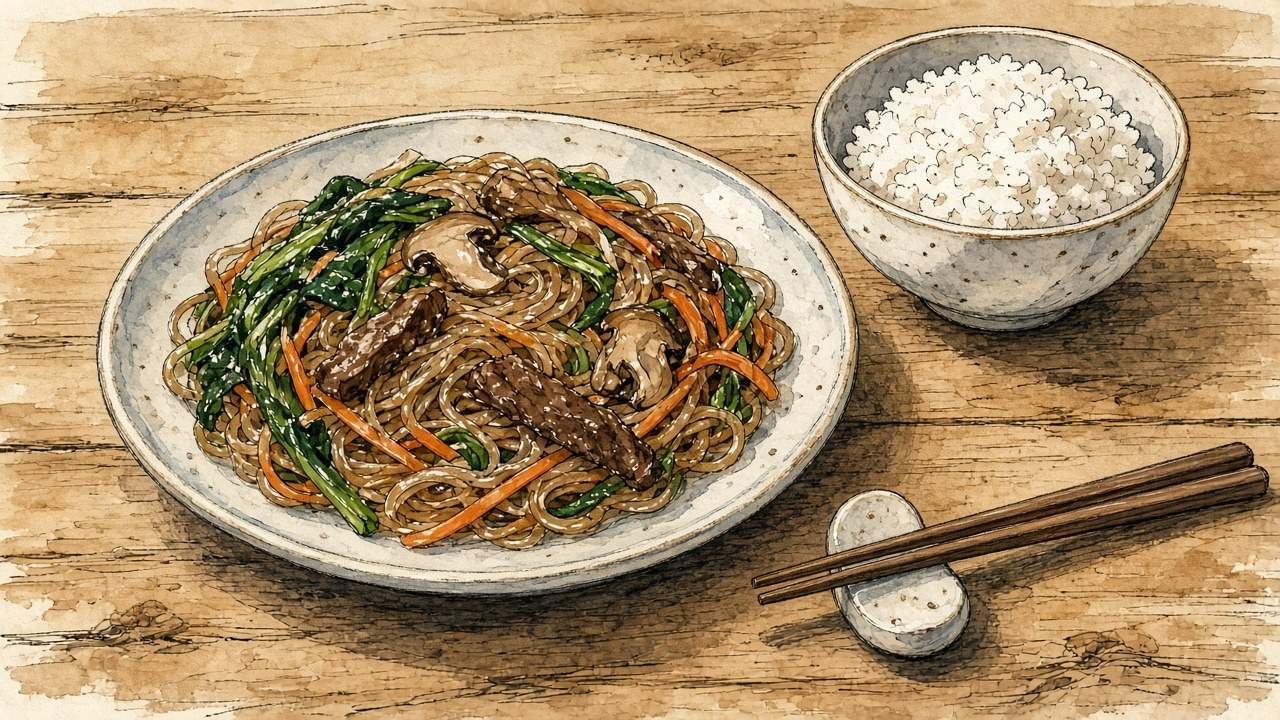
Japchae (Glass Noodle Stir-fry)
Each ingredient cooks at a different rate, so stir-fry them one at a time, and after boiling the noodles, stir-fry them once in a soy sauce seasoning so the flavor soaks in. Finally, turn off the heat, combine everything, and toss with sesame oil.
한국어로 보기 (Korean version)
Steps
- 1
Soak the glass noodles in lukewarm water for 30 minutes.
Prep the other ingredients while they soak and the timing works out.
- 2
Cut the beef into thin strips and toss with 1 Tbsp soy sauce, 1/2 Tbsp sugar, the minced garlic, and a little sesame oil. Thinly slice the onion and carrot into strips, and thinly slice the shiitakes.
Cutting the vegetables to a similar thickness helps them blend with the noodles.
- 3
Blanch the spinach in boiling salted water for 30 seconds, rinse in cold water, squeeze out the water firmly, and season with a little salt and sesame oil.
- 4
Heat a little cooking oil in a pan over medium heat. Stir-fry the onion and carrot together for 2 minutes, then the mushrooms separately for 1 minute, seasoning each with a pinch of salt, and set aside.
If you cook them all at once, the onion releases water and the carrot goes soft.
- 5
Add the beef to the same pan and stir-fry over medium heat for 3 minutes until cooked.
- 6
Boil the soaked noodles for 6 minutes and drain in a sieve. Put them in the pan with 3 Tbsp soy sauce, 1½ Tbsp sugar, and 1 Tbsp cooking oil, and stir-fry over medium heat for 2 minutes so the seasoning soaks in.
Snip the noodles two or three times with scissors to make them easier to eat.
- 7
Turn off the heat, add the vegetables, beef, and spinach, then add 2 Tbsp sesame oil, the sesame seeds, and pepper and toss. If it tastes bland, add a little more soy sauce.
Toss by hand so the noodles don't break and everything mixes evenly.
Substitutions
| Instead of | Use | How |
|---|---|---|
| beef, cut for japchae | 100 g pork, cut for japchae | Stir-fry pork for 4 minutes, until fully cooked with no pink inside. |
| spinach | a handful of Asian chives (buchu) | Don't blanch the chives; add them at the end and let the residual heat wilt them. |
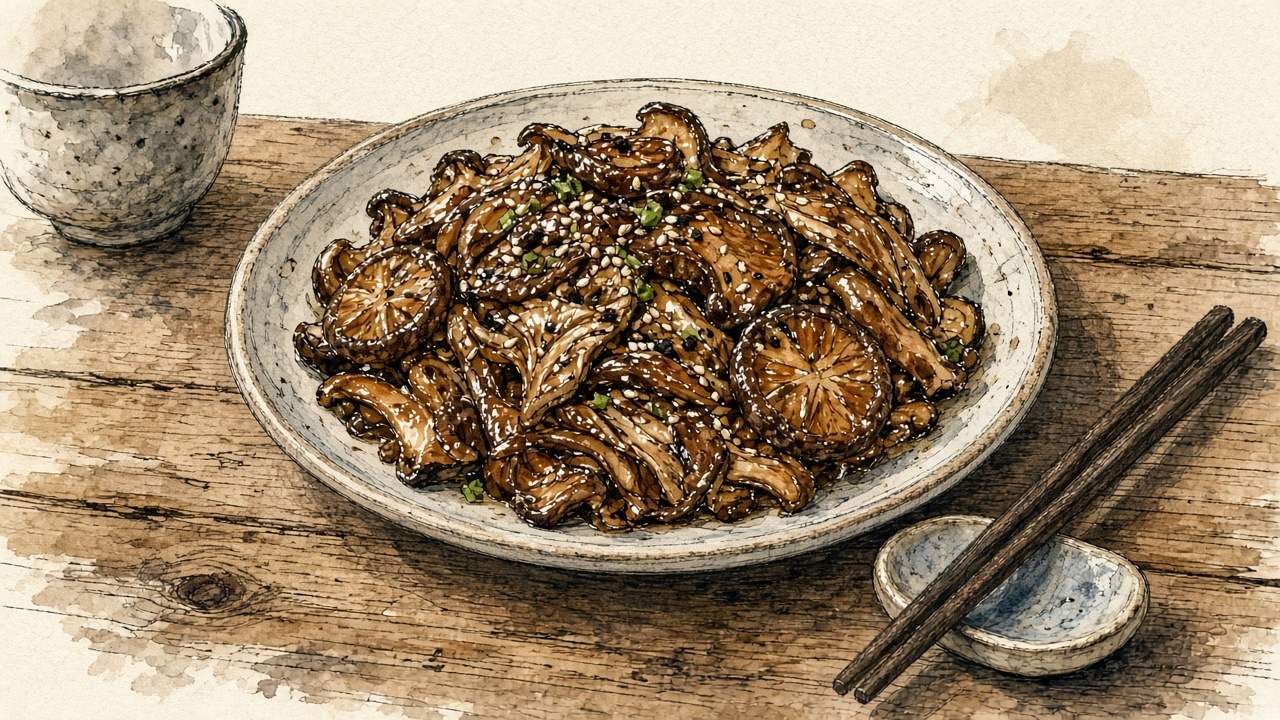
| shiitake mushrooms | a handful of oyster mushrooms | Tear the oyster mushrooms along the grain and stir-fry them the same way for 1 minute. |
Storing leftovers
As japchae cools, the noodles firm up and absorb the seasoning, so it gets saltier. Store in an airtight container in the refrigerator and eat within 2 days; to reheat, stir-fry in a pan with 2 Tbsp water over medium heat for 2 minutes, loosening the noodles. Freezing makes the noodles mealy and draws water from the vegetables, so don't freeze it.
Serve with
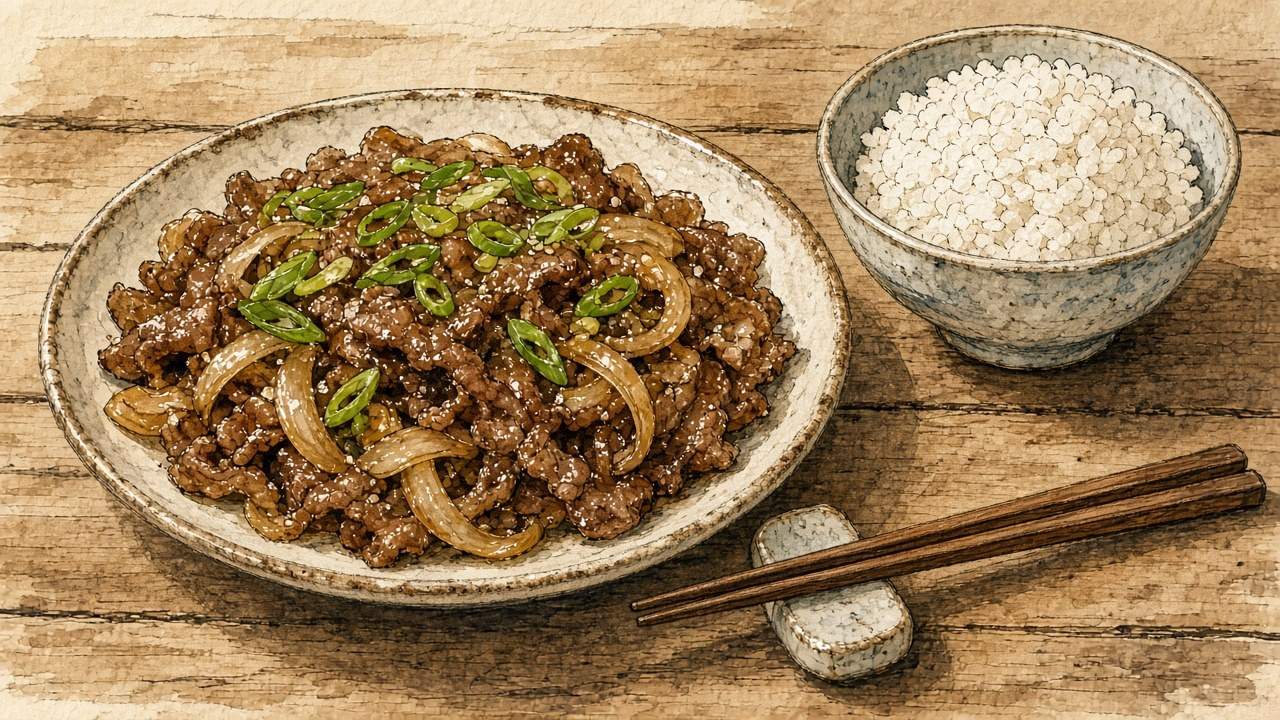
Rice, soup, and kimchi. For a festive table, serve it with jeon (savory pancakes) or bulgogi.
Making more or less
When making a bigger batch, don't add all the noodle seasoning at once — add 2/3, taste, then add more.
Questions
How do I keep japchae noodles from clumping?
Boiled glass noodles stick together if left as they are. Drain them in a sieve as soon as they're cooked and stir-fry right away with the soy sauce, sugar, and cooking oil to coat them in oil, and they'll clump less. If they've already set, sprinkle with a little water and loosen them in the pan.
More with the same ingredients