Rice Dishes
Bibimbap (Mixed Rice with Vegetables)
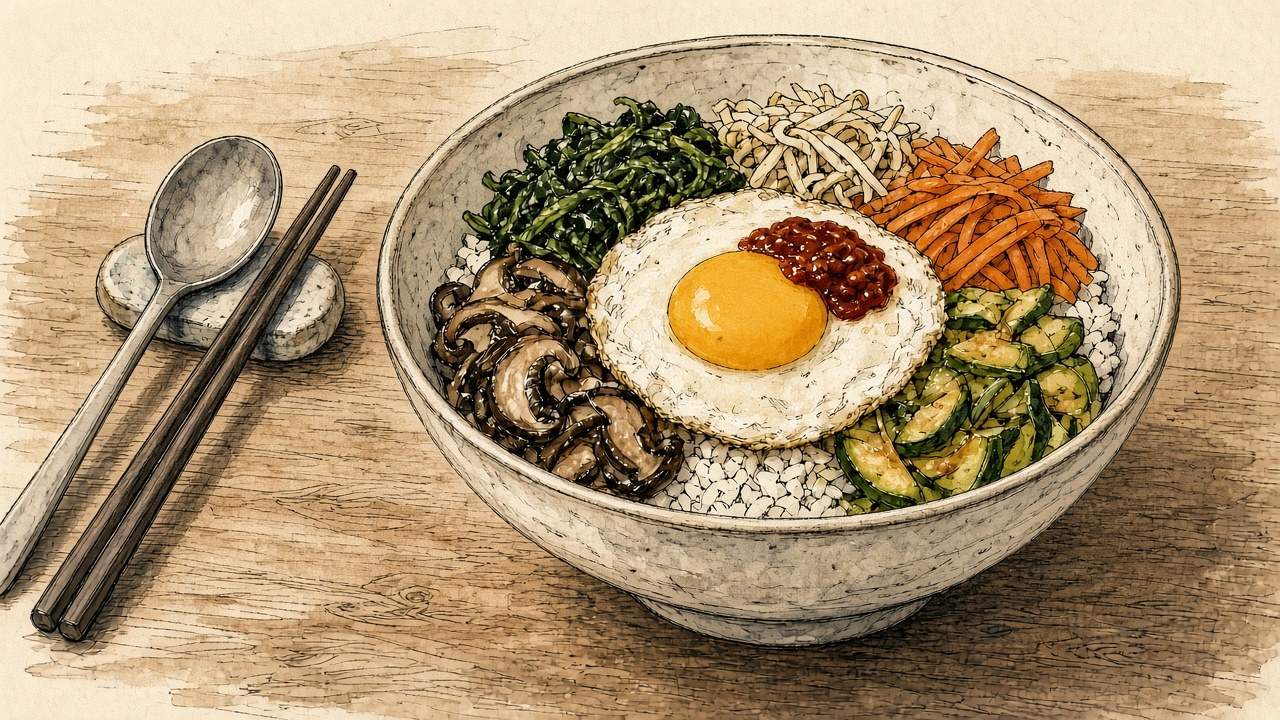
Boil the soybean sprouts with the lid on until fully cooked before seasoning them, and blanch the spinach only briefly. Stir-fry the carrot and beef, fry an egg, arrange everything over rice, and mix with gochujang.
한국어로 보기 (Korean version)
Steps
- 1
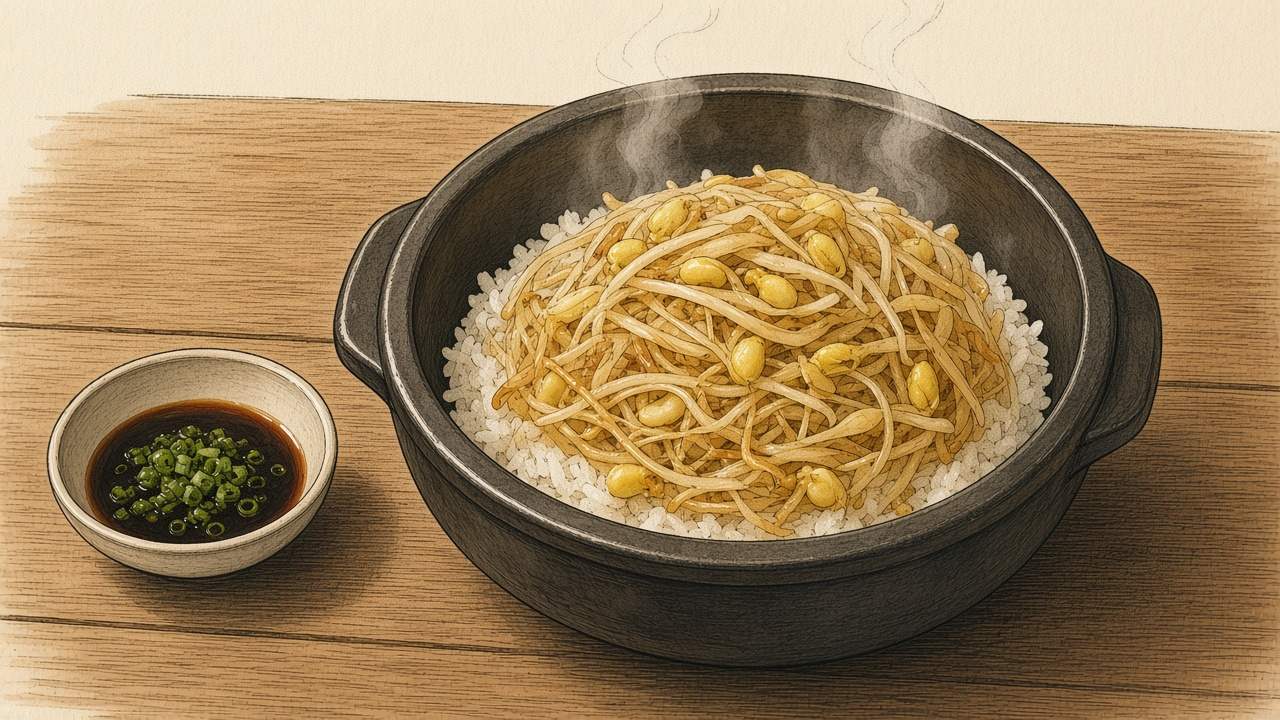
Put the soybean sprouts in a pot with 100 ml water and a pinch of salt, cover, and cook over medium heat for 5 minutes until fully cooked. Drain and season with a little salt and sesame oil.
Opening and closing the lid while they cook brings out a grassy smell, so keep it covered until they're done.
- 2
Blanch the spinach in boiling salted water for 30 seconds, rinse in cold water, squeeze out the water, and season with a little salt and sesame oil.
- 3
Julienne the carrot thinly, stir-fry in a pan with oil over medium heat for 1 minute 30 seconds, and season with a pinch of salt.
- 4
Toss the beef with the soy sauce, sugar, minced garlic, and a little sesame oil, then stir-fry in the same pan over medium heat for 4 minutes until cooked through with no red left.
Break the meat up finely with a spatula as it cooks so it doesn't clump.
- 5
Add a little oil to the pan, crack in the eggs, and cook over medium-low heat for 3 minutes, then flip and cook 1 minute more until the yolks are set.
- 6
Put warm rice in bowls, arrange the vegetables, carrot, beef, and fried egg around the top, and serve with the gochujang, remaining sesame oil, and sesame seeds to mix in.
Mixing 1 tsp sesame oil and a little sugar into the gochujang ahead of time makes it easier to mix through the rice.
Substitutions
| Instead of | Use | How |
|---|---|---|
| ground beef | 100 g ground pork | Stir-fry pork for 5 minutes, until cooked all the way through with no pink inside. |
| spinach | 1/3 Korean zucchini (aehobak) | Julienne the zucchini, salt it for 5 minutes, squeeze out the water, and stir-fry over medium heat for 2 minutes. |
| gochujang | soy sauce dressing | For a non-spicy version, mix 1 Tbsp soy sauce, 1 Tbsp sesame oil, and sesame seeds and use that instead. |
Storing leftovers
After a day, the seasoned vegetables release water and lose their sesame oil aroma. Store the vegetables and cooked beef in separate containers in the fridge and eat within 2 days; reheat the beef in a pan until hot all the way through, and fry a fresh egg. Don't keep rice once it's mixed, and don't freeze.
Serve with
One soup is plenty, such as doenjang-jjigae (soybean paste stew) or miyeok-guk (seaweed soup). For kimchi, choose a crunchy one like kkakdugi (cubed radish kimchi).
Making more or less
For more people, make a generous batch of the vegetables ahead and fry the eggs to order, one per person.
Before you cook
- Don't eat soybean sprouts raw; boil them until fully cooked.
Questions
How can I make bibimbap less spicy?
Mix with a dressing of 1 Tbsp soy sauce, 1 Tbsp sesame oil, and sesame seeds instead of gochujang. There's less soy dressing, so the rice won't be as well coated; season the vegetables a little more strongly or add plenty of the stir-fried beef so it doesn't taste bland.
More with the same ingredients