Side Dishes
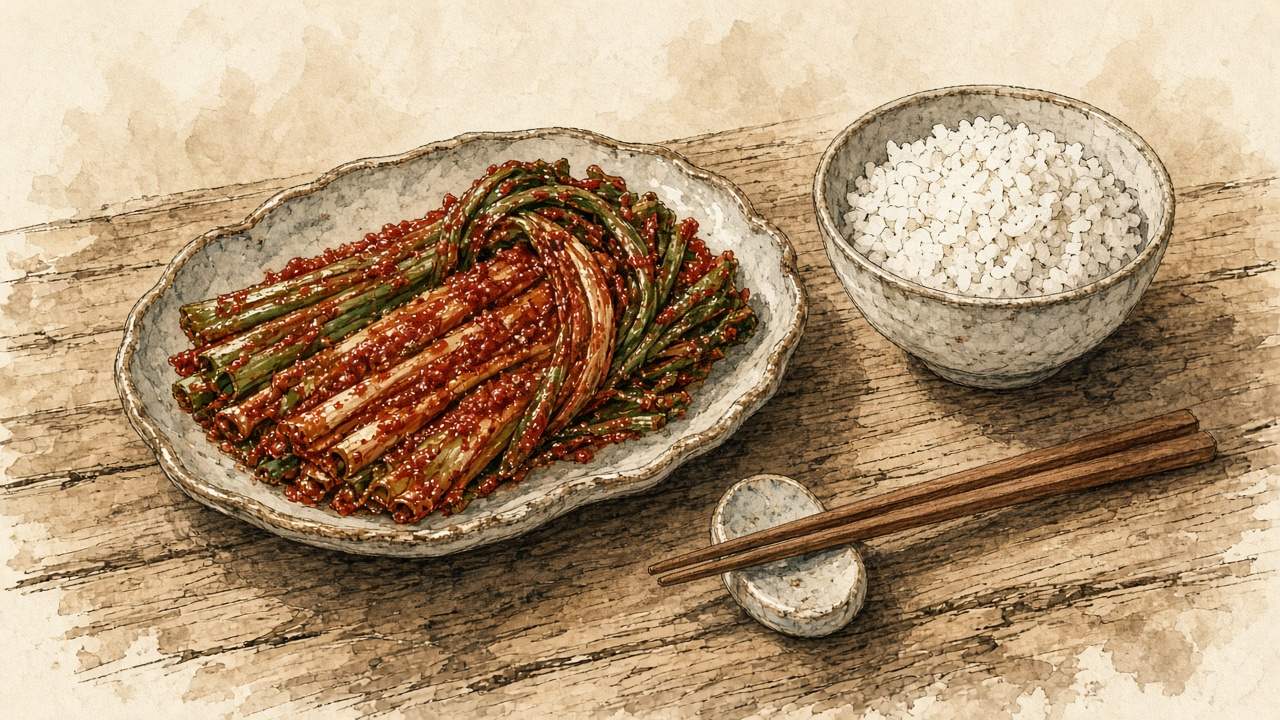
Pa-kimchi (Green Onion Kimchi)
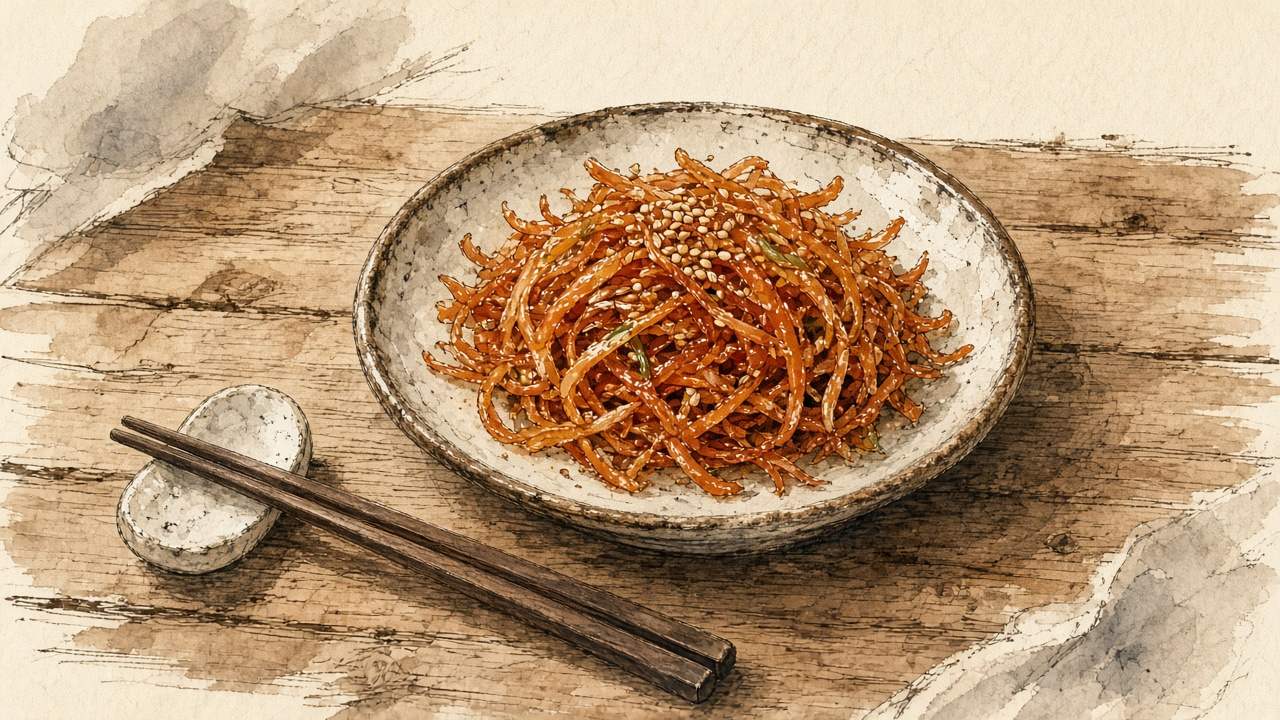
Salt the white parts of the scallions in fish sauce first to soften them, then coat them in a gochugaru seasoning made with glutinous rice paste. You can eat it right away, or let it ripen at room temperature for a day before refrigerating to develop its flavor.
한국어로 보기 (Korean version)
Steps
- 1
Trim the roots of the scallions, peel off any yellowed outer layers, rinse under running water, and shake off the water. Leave them whole; don't cut them.
If dirt remains in the white parts, pull them open with your fingers to wash.
- 2
Lay the scallions in a wide container with the white parts all at one end, pour the fish sauce evenly over the white parts, and let them salt for 20 minutes. Turn them once halfway through.
The green tops wilt quickly, so pour the fish sauce mainly over the white parts.
- 3
Meanwhile, whisk the glutinous rice flour into the 100 ml water in a small pot and cook over low heat for 2 minutes, stirring, to make a thick paste. Let it cool completely.
Hot paste cooks the scallions and makes them taste grassy, so be sure to cool it.
- 4
Pour off the fish sauce used for salting and mix it with the gochugaru, minced garlic, sugar, cooled rice paste, and thinly sliced chilies to make the seasoning.
- 5
Gently coat the scallions with the seasoning, starting with the white parts as if spreading it on. Gather a few stalks at a time, fold them in half, and wrap with the green tops to make small bundles.
Kneading hard bruises the scallions and makes them taste grassy, so sweep the seasoning on with your palm.
- 6
Sprinkle with sesame seeds, pack into an airtight container, let ripen at room temperature for 1 day, then refrigerate.
Substitutions
| Instead of | Use | How |
|---|---|---|
| scallions | 400 g silpa (thinner young scallions) | Silpa is more tender, so cut the fish sauce salting time to 10 minutes. |
| anchovy fish sauce | 65 ml sand lance fish sauce (kkanari aekjeot) | The saltiness is similar, so use the same amount, and reduce the sugar a little if you like. |
Storing leftovers
Let it ripen at room temperature for 1 day, then refrigerate; it's crunchiest eaten within 5–7 days. It turns sour as it ripens, and sour pa-kimchi is great cooked into kimchi jjigae (kimchi stew) or fried rice. As a side dish, eat it cold without heating, and don't freeze it — the texture falls apart.
Serve with
Suyuk (boiled pork slices), doenjang jjigae (soybean paste stew), and rice. It's especially good with rich, fatty meat.
Making more or less
Even when making less, keep the seasoning ratio the same; a day of ripening mellows the heat.
Before you cook
- If you see mold, or it smells off and turns slimy, don't just remove that part — throw out the whole batch.
Questions
How long should pa-kimchi ripen?
After a day at room temperature, the seasoning soaks in and it starts to ripen slightly, so refrigerate it then. Eaten right away it tastes fresh and grassy with strong heat, and it gets more sour the longer it ripens in the refrigerator. In hot weather, cut the room-temperature time to half a day.
Can I use Korean leek instead of scallions?
You can cut the white part of a Korean leek (daepa) into long strips, but the texture will be thick. Silpa (thinner young scallions) makes it more tender.
More with the same ingredients