Braised Dishes
Mechurial Jangjorim (Soy-braised Quail Eggs)
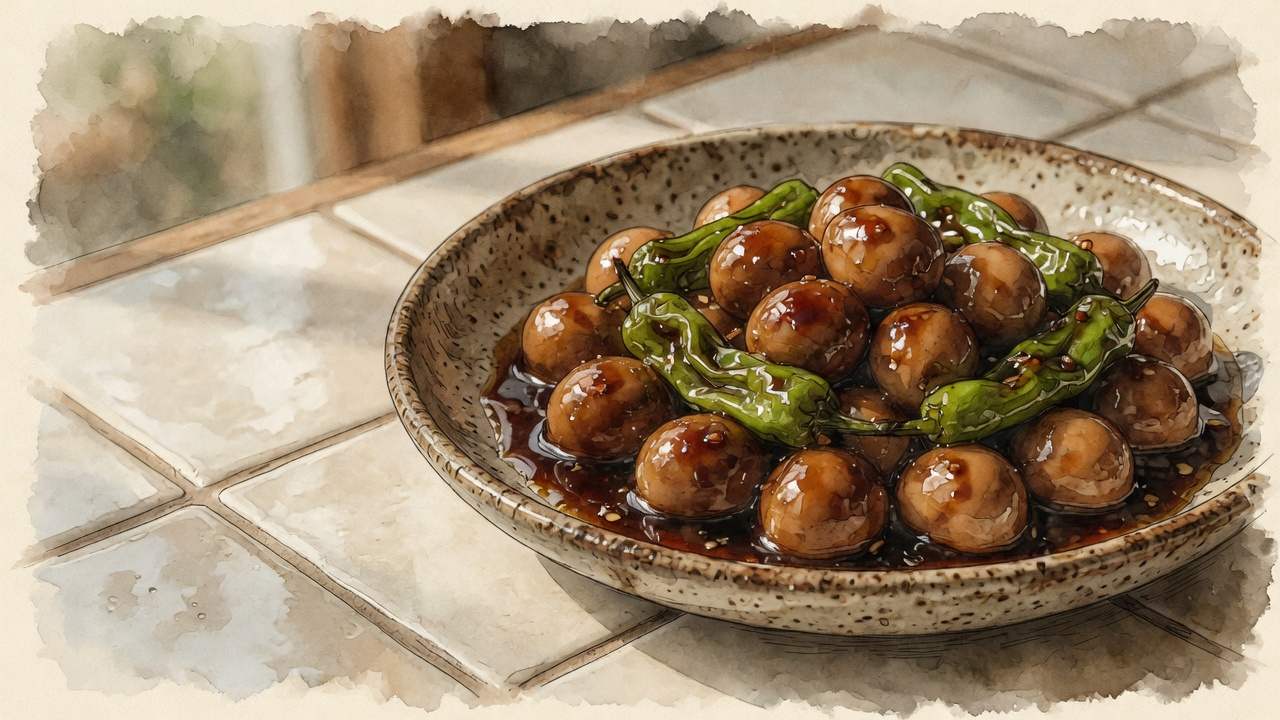
Boil the quail eggs, cool them in cold water, and peel, then braise them with whole garlic in a soy sauce and sugar liquid over medium-low heat. Add the shishito peppers at the end so they stay green, and turn off the heat while a little sauce remains so the eggs stay tender.
한국어로 보기 (Korean version)
Steps
- 1
Put the quail eggs in a pot with enough cold water to cover, add the salt, and set over medium heat. Once the water starts to boil, cook 5 minutes more.
Gently roll the eggs with a spoon until the water boils so the yolks settle in the center.
- 2
Soak the boiled eggs in cold water for 5 minutes until completely cool, then peel them.
Put the eggs in a lidded container with a little water and shake it; the shells crack all over and peel much faster.
- 3
Stem and rinse the shishito peppers, halve any large ones on the diagonal, and poke each once or twice with a fork.
The holes let the sauce soak in and keep the peppers from bursting as they braise.
- 4
In a pot, combine 300 ml water, the soy sauce, sugar, and garlic. When it boils, add the eggs and braise over medium-low heat for 15 minutes, spooning the sauce over and rolling the eggs now and then.
- 5
Add the peppers and syrup and braise 5 minutes more. When the sauce has reduced to a shallow layer, turn off the heat and sprinkle with sesame seeds.
Adding the syrup last gives a glossy finish and keeps the sauce from catching on the bottom.
Substitutions
| Instead of | Use | How |
|---|---|---|
| raw quail eggs | 500 g boiled, peeled quail eggs | Rinse once in cold water, skip steps 1 and 2, and go straight to braising. The braising time stays the same. |
| shishito peppers | 2 Cheongyang chilies (or any hot green chili), or leave out | Slice the chilies on the diagonal and add them at the end for a little heat. Leaving them out barely changes the dish. |
| syrup | 1/2 Tbsp sugar | Sugar gives a similar sweetness with a little less shine. |
Storing leftovers
Keep the eggs submerged in the sauce in the fridge and eat within 4 days. They get saltier each day as the soy sauce works its way in; if they taste too salty, add a splash of water, bring back to a boil once, and let cool. The peppers turn yellowish after a day, so eat them first. It is fine eaten cold as a side dish, and do not freeze it, since boiled quail egg whites turn rubbery.
Serve with
Rice, kongnamul-guk (soybean sprout soup), and roasted seaweed. A salty side like this goes well with a clear soup.
Making more or less
To double the batch, double the soy sauce and sugar but use only 1½ times the water, in a wider pot, so the braising time stays the same.
Questions
Why do my braised quail eggs turn wrinkly?
Braising too long over high heat draws water out of the whites, so the surface shrivels and turns tough. Drop the heat to medium-low as soon as the sauce boils, and stop while a little sauce is left so the eggs stay smooth.
Can I add beef to quail egg jangjorim?
Yes. Simmer 200 g beef eye of round separately for 30 minutes, shred it along the grain, and use the cooking liquid as the braising water. Add 1 Tbsp more soy sauce and put the beef in at the same time as the eggs.
More with the same ingredients